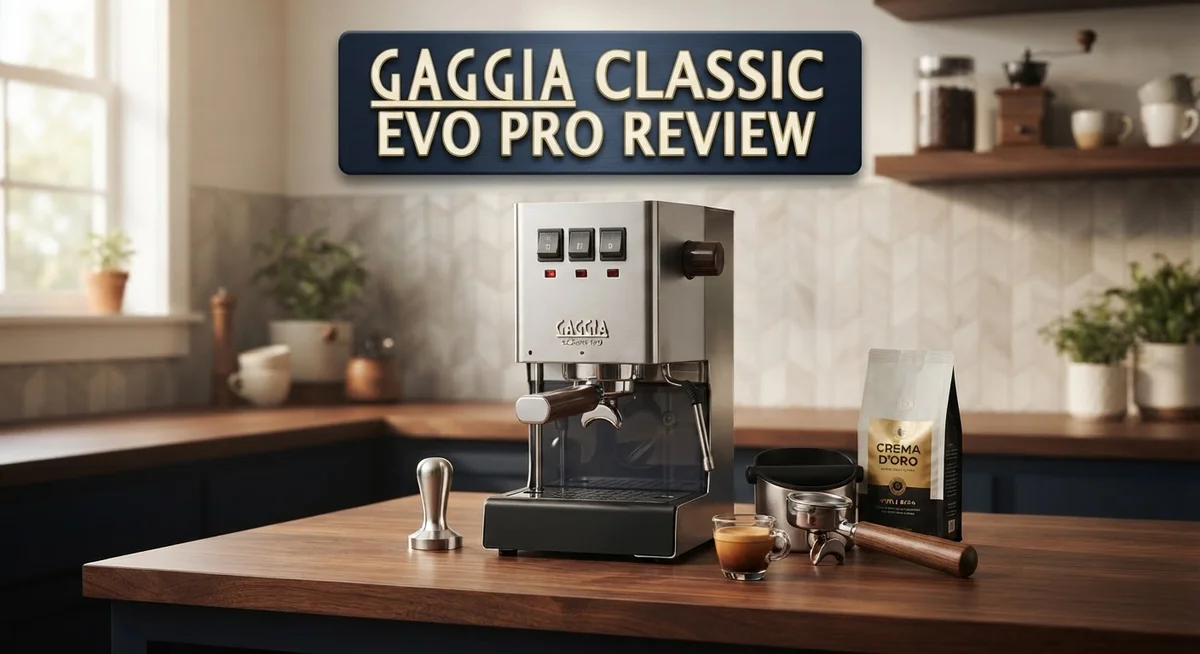
Gaggia Classic Evo Pro Review: Should You Buy This?
Espresso lovers want one thing: a shot that tastes rich and smooth. The Gaggia Classic Evo Pro promises just that.
This machine builds on a legacy. Gaggia has made home espresso machines for decades. The Evo Pro is their latest update.
It features a lead free brass boiler and a solid stainless steel dispersion plate. These parts help create five star espresso and silky microfoam at home.
There is a learning curve here. But once you master it, your morning coffee routine changes forever.
Some users report reliability hiccups over time. We will cover those details too.
This review breaks down every feature, pro, and con. You will learn if the Gaggia Classic Evo Pro fits your kitchen and your coffee goals.
Let’s dive into what makes this machine a standout choice for home baristas.
In a Nutshell
Here’s the quick rundown on this machine:
- Solenoid valve technology: The 3 way solenoid valve keeps your puck clean and dry after each shot. This means less mess and easier cleanup every time.
- Generous water capacity: A 72 oz reservoir lets you pull many shots before refilling. Great for busy mornings or when friends stop by.
- Mod friendly design: This machine welcomes upgrades and tweaks. Home baristas love customizing it to fit their exact taste.
- Five star shot potential: With the right technique, this machine pulls espresso that rivals coffee shop quality. It also handles microfoam beautifully for lattes and cappuccinos.
- Stands out from automated rivals: Unlike machines like the Breville Bambino Plus, this one puts you in full control. You decide every variable in your brew.
- Built for the long haul: Many users see this as a machine that grows with their skills. It rewards practice and patience over time.
This machine suits anyone who wants hands on control over their coffee ritual.
Boiler Design and Build Quality
The boiler sits at the heart of any espresso machine, and the Gaggia Classic Evo Pro delivers solid engineering here. Lead-free brass construction handles heat distribution with consistency. The boiler maxes out at 140ml total capacity, though the machine operates best with around 105ml of water actively in use.
Brass boilers offer real advantages over aluminum. They retain heat better and resist corrosion over years of use. This choice signals that Gaggia built this machine to last through countless shots and cleaning cycles.
The stainless steel dispersion plate sits directly above the boiler. This component spreads water evenly across your coffee grounds. Even distribution means better extraction and fewer sour or bitter notes in your cup. It’s a simple part, but it makes a measurable difference in shot quality.
Water delivery happens through a 3-way solenoid valve. This valve does three jobs: it pushes water into the group head, stops the flow when you release the lever, and vents pressure from the puck. The result? Your coffee puck stays clean and dry between shots. You won’t deal with soggy grounds or messy cleanup.
Build quality here represents a real step up from older Gaggia models. The machine feels substantial in your hands. Metal parts connect tightly. The overall construction invites confidence, especially when you’re learning espresso basics.
That said, some users report boiler issues over time. A small number experience leaks or pressure problems after extended use. Gaggia addressed this in the Evo Pro update, but occasional reliability hiccups still surface in user reports. The single boiler design also means you can’t steam milk while pulling a shot—you must wait for the boiler to cool slightly before switching modes.
Repairability stands out as a major strength. Parts come apart easily. Replacement components stay affordable. This design philosophy means your machine can grow with your skills rather than becoming e-waste. The brass boiler and solid internals support years of hands-on learning and experimentation.

- Solid Steel Housing, Made in Italy
- 9 Bar Espresso Extractions

Last update on 2026-10-27 / Affiliate links / Images from Amazon Product Advertising API
Espresso Performance and Shot Quality
The Gaggia Classic Evo Pro pulls shots that rival what you get at specialty coffee shops. With proper technique, this machine delivers rich espresso and velvety microfoam. The quality sits well above what entry level machines typically offer.
The solid stainless steel dispersion plate plays a major role here. Water flows evenly across your coffee grounds. This even distribution means fewer channeling problems and more consistent extractions. You get better flavor in every shot.
The lead free brass boiler holds heat steadily throughout your brewing session. Brass retains temperature better than aluminum alternatives. Your water stays hot enough for quality espresso without wild temperature swings. This stability matters when you’re dialing in your technique.
The 3 way solenoid valve keeps your puck clean and dry after each shot. No dripping. No mess. This small detail makes a real difference in shot consistency and machine longevity.
Manual operation means you control everything. You decide when to start the pump. You decide when to stop. This gives you power to adjust on the fly if something feels off. Experienced baristas love this level of control.
The learning curve is real, though. New users need time to master tamping pressure, grind size, and timing. Expect your first shots to be hit or miss. Within a few weeks of practice, most people dial in solid results. The machine rewards your effort with better shots as your skills grow.
Some users report boiler reliability issues over time. A small percentage experience problems that require repair or replacement. These cases seem rare, but they do happen. The good news? This machine is highly repairable. Parts are available. The design lets you access components easily.
Shot quality consistency improves once you nail your routine. Temperature stability helps. The brass boiler and solid dispersion plate both contribute. Pull shots at the same time each day, and your results become predictable.
This machine produces espresso that genuinely tastes good. It won’t match super automatic espresso machines for convenience, but it beats them on flavor. That’s the real story here. You get cafe quality shots in your kitchen.
Ease of Use and Learning Curve
The Gaggia Classic Evo Pro puts you firmly in control, which means the learning curve is real. This machine demands your attention and skill. You won’t just push a button and walk away.
Manual operation is the core here. You decide when to start the shot, when to stop it, and how much pressure to apply. This hands-on approach separates learners from experienced users. Beginners often struggle with timing and technique at first.
The good news? The machine itself is straightforward to understand. The layout makes sense. Water goes in the reservoir. Coffee goes in the portafilter. You pull the lever or press the button. The basic flow feels natural once you spend a few minutes with it.
The real challenge comes from dialing in your shots. You need to learn grind size, tamping pressure, and extraction time. These three elements work together. Get one wrong and your espresso suffers. This learning process typically takes weeks, not days. Patience matters here.
The 3-way solenoid valve actually helps you learn. It releases pressure after each shot, keeping your puck clean and dry. This means less mess when you’re figuring things out. You can focus on technique without worrying about water spraying everywhere.
Temperature stability also plays a role in your learning curve. The lead-free brass boiler holds heat well, but you still need to understand temperature surfing. This is a technique where you time your shots based on how long the machine has been running. New users find this confusing at first.
The mod-friendly design is a hidden advantage for learners. As you progress, you can upgrade parts to improve performance. This keeps the machine interesting long-term. You’re not stuck with a static experience.
Most people report that after two to three weeks of regular use, the learning curve flattens out. You start pulling better shots. The machine becomes less intimidating. This isn’t a machine for people who want instant results, but it rewards your effort with genuine improvement.
Top 3 Alternatives
Breville Barista Express

- MANUAL HAND-TEXTURED MICROFOAM: The powerful steam wand on this cappuccino maker and...
- PRECISE DOSE GRINDING: Integrated precision conical burr grinder on bean-to-cup...
Last update on 2026-10-27 / Affiliate links / Images from Amazon Product Advertising API
The Breville Barista Express combines a burr grinder and espresso machine in one unit. You get integrated grinding right into your workflow, so beans go straight to the portafilter. The machine heats up fast—about 3 seconds—and delivers consistent pressure at 9 bars.
This model works well for beginners who want simplicity. The steam wand froths milk easily, and the single-dose hopper lets you switch between beans without waste. You control grind size with a dial, making adjustments straightforward.
Rancilio Silvia Espresso Machine

- Classic Espresso: The Silvia has been in production for over 20 years-- making it one...
- Single Boiler: The single 12-ounce brass boiler serves both brew and steam...
Last update on 2026-10-27 / Affiliate links / Images from Amazon Product Advertising API
The Rancilio Silvia stands out for its solid construction and professional-grade build. This machine uses a rotary pump, which creates stable pressure for excellent shot quality. Heating takes longer than some competitors, but the results justify the wait.
You’ll need a separate grinder with this model, but that’s actually an advantage—you get more control over your setup. The steam wand delivers powerful milk frothing. Silvia owners often keep their machines for years because of the durable design and easy maintenance.
Lelit Victoria Espresso Machine

- Solid Steel Housing, Made in Italy
- 9 Bar Espresso Extractions
Last update on 2026-10-27 / Affiliate links / Images from Amazon Product Advertising API
The Lelit Victoria features a unique dual boiler system. You can brew espresso and steam milk simultaneously, which speeds up your workflow significantly. The machine heats up in about 10 minutes and maintains stable temperatures throughout your session.
This model includes a PID controller for precise temperature management. The rotary pump ensures consistent pressure, and the group head design promotes even water distribution. The Victoria appeals to coffee enthusiasts who want reliability without unnecessary complexity. Build quality feels premium, and parts are accessible for long-term use.
Repairability and Mod-Friendliness
The Gaggia Classic Evo Pro stands out because you can actually fix it yourself. Most entry-level machines make repairs difficult or impossible. This one? Different story.
The brass boiler design means replacement parts exist and stay available. You won’t struggle to find a new boiler if yours fails. The stainless steel dispersion plate comes off easily. The 3-way solenoid valve is accessible without major disassembly. This matters more than you might think.
Modding potential is real here. The machine’s simple architecture means upgrades work smoothly. You can swap the dispersion plate for improved flow. Many users upgrade the shower screen to a better aftermarket version. The portafilter accepts standard modifications. The steam wand accepts different tips. None of these changes require special tools or expertise.
The single boiler design actually helps with repairs. Fewer components mean fewer things break. When something does need attention, the path to fixing it is straightforward. You don’t need to send it to a service center. Online communities share detailed repair guides for this exact model.
Build quality improvements matter for longevity. The updated construction versus older Gaggia models means fewer repairs needed overall. The brass boiler resists corrosion better than aluminum alternatives. Stainless steel components don’t rust easily. This translates to a machine that ages well.
That said, some users report boiler issues over time. These aren’t manufacturing defects on every unit. Many machines run for years without problems. The key is regular maintenance and proper descaling.
The manual operation actually aids repairability. Complex automatic systems introduce more failure points. Simple mechanical controls rarely malfunction. You understand how the machine works, which makes troubleshooting easier.
Gaggia designed this machine with longevity in mind. Parts availability is excellent. Repair documentation exists online. The mod community actively shares knowledge. If something breaks, you have real options. You won’t feel trapped by an unrepairable design. This approach separates the Gaggia Classic Evo Pro from cheaper competitors that become landfill when problems emerge.
Reliability and Common Issues
The Gaggia Classic Evo Pro has earned a solid reputation for durability within its class. The lead-free brass boiler resists corrosion and maintains consistent heat over thousands of shots. This material choice directly impacts how long your machine stays functional.
Real-world ownership data shows most units perform reliably for years with basic care. The 3-way solenoid valve reduces stress on internal components by releasing pressure smoothly after each extraction. This design feature extends the lifespan of seals and gaskets that typically wear out first.
However, some users report occasional boiler issues early in ownership. These cases often involve manufacturing defects rather than design flaws. Gaggia has addressed quality control in recent production runs. If problems occur, they typically surface within the first few months of use.
The machine’s simplicity actually works in your favor here. Fewer electronic parts mean fewer things can fail. The manual operation removes dependency on complex automation that breaks down over time. You won’t deal with automatic shut-off sensors or programmable displays that malfunction.
Repairability stands out as a major strength. Most internal components are accessible without specialized tools. Replacement parts remain available from multiple suppliers. The brass boiler, pump, and valve can all be serviced or replaced individually. This modularity keeps your machine running even if one component fails.
The single boiler design simplifies troubleshooting significantly. When issues arise, you can identify the culprit quickly. Online communities offer extensive repair guides specific to this model. Many owners successfully perform their own maintenance and upgrades.
Common wear items include the rubber gasket around the group head and the shower screen. Both parts cost little and install easily. Regular descaling prevents mineral buildup that could damage the boiler. Most users report needing descaling every 2 to 3 months depending on water hardness.
The mod-friendly architecture means you can upgrade components to improve reliability. Better seals, upgraded pumps, and aftermarket parts exist to enhance longevity. This flexibility ensures your machine can adapt as your needs change.
Overall, the Gaggia Classic Evo Pro delivers consistent reliability for users willing to maintain it properly.
Pros and Cons
Pros
- Produces quality espresso shots and microfoam that rival machines in higher classes
- Most durable and repairable option in the entry level category with mod-friendly design
- Updated build quality compared to older Gaggia models means fewer repairs needed
- Simple architecture makes it straightforward to learn espresso basics and troubleshoot issues
- Brass boiler construction ensures replacement parts stay available long term
Cons
- Manual single boiler operation requires you to decide when to start, stop, and adjust pressure on every shot
- Steep learning curve for dialing in grind size, tamping pressure, and extraction time
- Some users report boiler issues early in ownership, though this remains uncommon
Who Should Buy It
The Gaggia Classic Evo Pro works best for home baristas who want to learn espresso from scratch. You need patience and curiosity. This machine teaches you how pressure, grind size, and tamping actually affect your shot. Beginners find the manual controls educational, not frustrating.
Coffee enthusiasts seeking hands-on control will love this machine. You decide every aspect of the brewing process. No automation means no guessing. You pull the lever, watch the pressure gauge, and stop extraction when it looks right. This direct feedback helps you improve quickly.
People who enjoy tinkering and upgrading equipment fit here perfectly. The Gaggia Classic Evo Pro accepts countless modifications. You can swap the shower screen, upgrade the pump, or add a PID controller later. The mod community is active and supportive. Parts remain available because the brass boiler design has been around for years.
Espresso fans on a tight schedule should look elsewhere. This machine demands attention during every shot. You cannot rush the process or expect automatic consistency. Mornings need time and focus.
Households with multiple coffee drinkers may struggle. The single boiler means you wait between milk steaming and espresso shots. You cannot pull shots while steaming milk. Busy families often prefer automatic machines instead.
Someone seeking a workhorse that lasts matters here too. The updated build quality means fewer repairs than older Gaggia models. Internal components stay accessible. Common wear items like gaskets and shower screens cost little to replace. Years of reliable service happen when you maintain it properly.
Espresso purists appreciate the simplicity. No fancy electronics fail. No computerized displays break. The mechanical design means you troubleshoot problems easily without specialized tools.
Skip this machine if you want convenience above all else. Automatic machines handle dialing in for you. The Gaggia Classic Evo Pro requires you to become the programmer. You learn espresso fundamentals through direct experience, not buttons and presets.
Final Verdict
The Gaggia Classic Evo Pro stands as a strong pick for anyone who wants to master espresso at home. It rewards patience with shots that taste like they came from a café.
This machine does not try to do everything. It focuses on giving you full control over your brew. That focus makes it stand out from automatic machines that hide the process from you.
Compared to the Breville Bambino Plus, this Gaggia asks more from you but gives more back. You get real skill development instead of preset buttons.
The Gaggia Classic Up offers a similar experience but lacks some of the build refinements found here. The Evo Pro edges ahead with its updated internals.
If you want a machine that grows with your skills, this one fits well. You can start simple and add upgrades as your knowledge expands.
Think of this machine as a long term investment in your coffee journey. It teaches you the craft instead of just serving you coffee.
Some buyers may find the learning phase frustrating at first. That frustration usually fades once you understand the rhythm of pulling shots.
This machine suits people who see espresso making as a hobby. It does not suit people who just want fast coffee before work.
The final verdict is simple. Choose this machine if you want a lasting relationship with your espresso setup. Skip it if you want zero effort mornings.
For most home baristas ready to learn, this Gaggia delivers real value in skill and quality. It stands as one of the few machines in its class built to last through years of daily use.
In short, the Gaggia Classic Evo Pro rewards commitment. Give it your attention, and it gives you café quality espresso for years to come.
Frequently Asked Questions
Does the Gaggia Classic Evo Pro come with a warranty?
The machine arrives with standard manufacturer coverage. You should check your receipt and the official Gaggia website for exact terms. Most entry-level espresso machines include at least a one-year parts warranty.
Can I upgrade or modify this machine later?
Yes. The mod-friendly design means you can swap the burr grinder, add a PID controller, or upgrade the steam wand as your skills grow. The simple brass boiler architecture keeps replacement parts easy to find for years to come.
What water should I use in the reservoir?
Filtered water works best. Hard tap water leaves mineral buildup inside the boiler over time. A simple pitcher filter or bottled water prevents scaling and keeps your shots tasting clean.
How long does it take to heat up?
The single boiler reaches temperature in about 8 to 10 minutes when cold. Once warmed, you can pull shots back-to-back. The 140ml brass boiler stays hot longer than smaller models, so you get consistent heat between pulls.
Is this machine suitable for beginners?
Absolutely, but with a catch. The learning curve is steep at first. You control every variable: grind size, tamping pressure, and extraction time. This hands-on approach teaches you espresso fundamentals fast. If you want a machine that does the thinking for you, look elsewhere. If you see espresso making as a hobby worth mastering, this one rewards your effort.

I’m Sarah, the creator behind Kitchen Kit. I’m passionate about finding kitchen tools that actually work and make cooking easier. Through hands-on testing and honest reviews, I help home cooks discover gadgets worth their counter space and budget. When I’m not testing the latest kitchen innovations, you’ll find me experimenting with recipes and hunting for that next game-changing tool.