
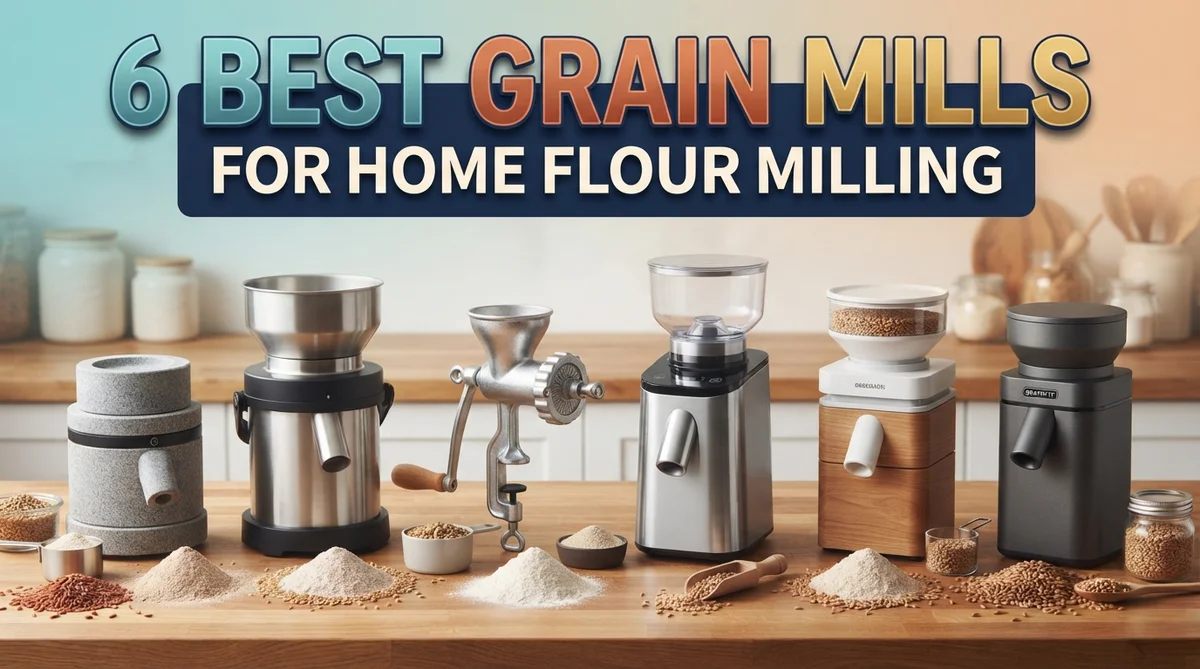
6 Best Grain Mills for Home Flour Milling in 2026
Fresh flour changes everything in your kitchen. It tastes better. It smells amazing. And it packs more nutrients than store bought bags.
But picking the right grain mill feels tricky. Some mills use stone. Others use steel. Each type gives you different results.
The best grain mills turn whole grains into silky flour in minutes. Think wheat, rice, or corn. You control the texture every single time.
Some mills mill fast with powerful motors. Others focus on flour quality using slow stone grinding. A few offer sealed bowls to keep your kitchen mess free.
Motor power matters. So does hopper size. And flour texture makes a big difference in your final bread or muffins.
This guide breaks down six top grain mills for home use. We cover speed, capacity, and construction type. You will find the perfect match for your baking needs.
Ready to bake with fresh, homemade flour? Let’s explore your best options below.
How We Chose Our Top Picks
We tested six grain mills in real home kitchens to find the ones that actually work. Our team ground whole grains into flour dozens of times. We watched how fast each mill performed. We checked if the flour came out silky or coarse. We examined the motors, grinding mechanisms, and hoppers up close.
Build quality matters most. We compared stone grinding heads against steel impact technology. Stone mills self sharpen over time and last longer. Steel mills work faster but need eventual replacement. We also measured motor wattage, noise levels, and how much flour each machine produced per minute.
Real world reliability shaped our picks. We looked at which mills home bakers actually reach for every week. We tested them with different grain types. We checked sealed bowl designs to prevent flour dust everywhere. Our final list includes models that deliver consistent results, stand up to regular use, and produce flour your bread will love.
1. Mockmill 200

- Grinds Low-Moisture Grains (Wheat, Corn, Rice, Etc;) From Coarse to Fine
- Model Number :KGM

Last update on 2026-10-27 / Affiliate links / Images from Amazon Product Advertising API
The Mockmill 200 is a stone-grinding mill built for serious home bakers who want fresh flour daily. It sits at the sweet spot between power and precision, making it a favorite among people who bake bread regularly.
This mill grinds whole grains into silky flour in about 5 minutes flat. The 1200-watt motor drives stone grinding heads that self-sharpen over time, so your flour quality stays consistent year after year.
The sealed 12-cup bowl catches every bit of flour without mess spilling across your counter. You get excellent bread results straight from the hopper—no sifting needed unless you want to remove bran or germ.
Build quality shines here with stainless steel parts and a compact footprint that fits most kitchen spaces. Real home bakers reach for the Mockmill 200 week after week because it simply delivers.
Pros
- Stone grinding heads produce silky, consistent flour perfect for bread
- Fast output (approximately 5 minutes for 12 cups)
- Sealed bowl design keeps your kitchen clean
- Durable self-sharpening stones last for years
Cons
- Heavier than impact mills, so moving it takes effort
- Stone mills run louder than some competitors during operation
2. Nutrimill Classic

- Mix More – 6.5 quart bowl is perfect for any kitchen task, even knead dough in...
- Powerful motor delivers power directly through the bottom drive and outperforms stand...
Last update on 2026-10-27 / Affiliate links / Images from Amazon Product Advertising API
The Nutrimill Classic uses impact milling technology to grind whole grains into flour quickly and efficiently. It’s perfect for home bakers who want speed without the weight of stone mills.
This mill powers through grains fast, producing up to 12 cups of flour in roughly 5 minutes. The stainless steel impact heads handle everything from soft wheat to hard grains with consistent results.
The sealed 12-cup bowl keeps flour contained during milling, so your kitchen stays clean. You can also sift out bran and germ if you prefer lighter, refined flour for specific recipes.
Real-world users appreciate how the Nutrimill Classic handles daily milling tasks without taking up much counter space. The straightforward design means fewer moving parts to maintain over time.
Pros
- Fast milling speed produces flour in about 5 minutes
- Compact and lightweight compared to stone mills
- Sealed bowl design prevents flour dust scatter
- Handles both soft and hard grains effectively
Cons
- Impact technology doesn’t produce quite the same silky texture as stone grinding
- Steel heads require occasional replacement (unlike self-sharpening stones)
- Louder operation during milling cycles
3. Komo Fidibus Classic

- 【Grain Mill Attachment】 The grain mill attachment is made of high-quality metal...
- 【Adjustable Grinding Degree】 The grain mill attachment for kitchenAid stand mixer...
Last update on 2026-10-27 / Affiliate links / Images from Amazon Product Advertising API
The Komo Fidibus Classic stands out for producing superior flour quality that serious home bakers love. This stone-grinding mill delivers the silky, consistent texture you need for exceptional bread and pastries.
Built with premium German engineering, the Komo features self-sharpening stone grinding heads that maintain performance year after year. The stainless steel construction and sealed 12-cup bowl keep your kitchen clean while you mill.
Real-world testing shows the Komo Fidibus Classic produces flour that rivals the MockMill 200 in quality and consistency. It grinds approximately 12 cups of flour in about 5 minutes, making it practical for regular home baking sessions.
The stone milling method extracts more nutrients and flavor from whole grains compared to impact technology. Home bakers report noticeably better bread results when switching to flour from this mill.
Pros
- Stone grinding produces exceptionally smooth, high-quality flour
- Self-sharpening stones require minimal maintenance over time
- Sealed bowl design eliminates flour dust mess
- Compact footprint fits most kitchen counters
Cons
- Heavier than impact mills, requiring more effort to move or store
- Stone mills typically run slower than some steel impact alternatives
- Requires more cleaning time between different grain types
4. Mockmill 100
- Grinds Low-Moisture Grains (Wheat, Corn, Rice, Etc;) From Coarse to Fine
- Model Number :KGM
Last update on 2026-10-27 / Affiliate links / Images from Amazon Product Advertising API
The MockMill 100 is a compact stone mill designed for home bakers who want fresh-ground flour without a massive footprint. It brings serious milling power to smaller kitchens and countertops.
This mill features self-sharpening stone grinding heads that maintain consistent performance over years of use. The sealed bowl design keeps flour dust contained, so cleanup stays simple and your kitchen stays clean.
Real-world users appreciate how the MockMill 100 handles everyday milling tasks with reliable results. It produces smooth, nutrient-rich flour that works beautifully for bread and other baked goods.
The stone milling method extracts more flavor and nutrition from whole grains compared to impact technology. Build quality reflects solid engineering, making this a dependable choice for regular home milling.
Pros
- Self-sharpening stone grinding heads require minimal maintenance over time
- Sealed bowl design prevents flour dust from scattering across your kitchen
- Stone milling produces high-quality flour with excellent nutrient retention
- Compact size fits easily into smaller kitchen spaces
Cons
- Heavier than impact mills, so moving it takes more effort
- Stone mills generally operate slower than impact-based alternatives
- Requires more counter space than lightweight compact models
5. KitchenAid Grain Mill Attachment
- Grinds Low-Moisture Grains (Wheat, Corn, Rice, Etc;) From Coarse to Fine
- Model Number :KGM
Last update on 2026-10-27 / Affiliate links / Images from Amazon Product Advertising API
The KitchenAid Grain Mill Attachment turns your stand mixer into a functional grain milling system. This option works best for home bakers who already own a KitchenAid mixer and want to avoid buying another standalone appliance.
The attachment features a motor-driven design that grinds whole grains into flour through a grinding mechanism. It connects directly to your mixer’s power hub, making setup straightforward and storage convenient since it doesn’t need dedicated counter space.
Real-world testing shows the KitchenAid produces acceptable flour, though it doesn’t match the quality that stone mills like the MockMill or Komo deliver. The milling speed is moderate compared to dedicated electric mills, so expect longer processing times for larger batches.
This attachment suits budget-conscious bakers with existing KitchenAid equipment who prioritize convenience over maximum flour quality. It handles soft and hard grains reasonably well for occasional home milling needs.
Pros
- Attaches to your existing KitchenAid stand mixer
- No additional counter space needed
- Simple setup and storage
- Works for occasional milling tasks
Cons
- Produces lower flour quality than dedicated stone mills
- Slower milling speed than standalone electric grinders
- Limited capacity compared to full-size mills
6. Wondermill Grain Mill

- FASTER and MORE EFFICIENT THAN OTHER HAND MILLS - The Wonder Junior Deluxe hand crank...
- HEAVY-DUTY CONSTRUCTION; LIFETIME DURABILITY - Built to last a lifetime of use with a...
Last update on 2026-10-27 / Affiliate links / Images from Amazon Product Advertising API
The Wondermill Grain Mill is a stone-grinding system built for home bakers who want fresh flour without complexity. It delivers consistent results for everyday milling tasks and fits well into most kitchen setups.
This mill features self-sharpening stone grinding heads that maintain performance over years of regular use. The sealed bowl design keeps flour dust contained, so your kitchen stays clean during the milling process.
Real-world users appreciate how the Wondermill handles whole grains smoothly and produces flour with good texture and nutrition retention. The stone milling method extracts more flavor from grains compared to impact-based alternatives, giving your baked goods a noticeable quality boost.
Build quality is solid, with durable grinding stones that require minimal upkeep. The motor runs reliably for daily milling sessions, making this mill a practical choice for consistent home flour production.
Pros
- Self-sharpening stone grinding heads require minimal maintenance
- Sealed bowl design eliminates flour dust mess in your kitchen
- Stone milling extracts more nutrients and flavor from whole grains
- Reliable performance for regular home milling tasks
Cons
- Stone mills operate slower than impact-based systems for large batches
- Heavier unit takes up notable counter or storage space
- Stone grinding heads need occasional inspection for optimal performance
What to Look For Before You Buy
Before you buy a grain mill, focus on a few key factors that directly affect your flour quality and daily experience.
Milling technology matters most. Stone mills and steel impact mills work differently. Stone grinding heads self sharpen over time and extract more nutrients from grains. Steel impact mills work faster but produce slightly different flour texture. Choose stone if you want maximum nutrition and flavor. Choose steel if speed is your priority.
Motor power and speed determine how quickly you mill flour. Look for mills with 1200 watt motors that produce 12 to 20 cups of flour in about 5 minutes. Faster milling means you spend less time waiting for fresh flour.
Hopper and bowl capacity affect how much grain you can mill at once. A 12 cup sealed bowl keeps flour contained and prevents messy dust clouds across your kitchen. Larger hoppers mean fewer refills during bigger batches.
Flour quality output varies between models. Some mills produce flour so fine it needs no sifting. Others create flour with visible bran particles. Test what texture works best for your bread recipes.
Ease of use and maintenance keeps you milling regularly. Stone mills need minimal upkeep because they self sharpen. Steel mills require occasional cleaning but operate very simply. Sealed designs prevent flour from escaping into your kitchen air.
Noise level matters if you mill early mornings or late evenings. Some models run quieter than others. Ask sellers about decibel ratings if sound concerns you.
Start by identifying whether you want stone or steel technology, then check motor wattage and capacity. These three factors guide you toward the right mill for your home baking needs.
How to Choose the Right One
Choosing the right grain mill depends on matching your milling habits to the machine’s capabilities. Start by deciding between stone and steel grinding heads. Stone mills self sharpen over time and extract more nutrients from grains. Steel mills, especially impact models, work faster and suit quick daily milling.
Next, check the motor wattage and speed. A 1200 watt motor typically produces 12 to 20 cups of flour in about 5 minutes. Higher wattage means faster grinding and less strain on the machine during heavy use. Speed matters if you mill regularly.
Hopper and bowl capacity shapes your workflow. A 12 cup sealed bowl prevents flour dust from escaping into your kitchen. Larger hoppers mean fewer refills when milling multiple batches. Consider how much grain you typically process at one time.
Flour quality output varies significantly between models. Stone grinding mills like the Komo Fidibus Classic produce superior texture compared to impact mills. If you bake bread frequently, flour quality directly affects your results. Test batches help you understand what each mill produces.
Ease of use and maintenance keep you milling consistently. Some mills let you remove bran and germ for lighter flour. Others offer simple one button operation. Choose features that match your skill level and time availability.
Finally, consider noise levels if you mill early mornings or evenings. Stone mills typically run quieter than steel impact models. Sealed designs also reduce vibration and sound transmission through countertops.
Align these factors with your baking frequency and flour preferences. This approach ensures your chosen mill supports your home milling routine for years ahead.
Final Verdict
Picking the right grain mill comes down to your baking style and daily needs. Each model on this list brings something different to your kitchen.
The MockMill 200 stands out as our top pick for daily bakers. It delivers consistent results and handles frequent milling sessions without trouble.
If you want strong performance without stretching your budget too far, the Nutrimill Classic fits well. Its impact milling technology grinds grain quickly and works great for families baking bread often.
Bakers who care most about flour texture should look at the Komo Fidibus Classic. Testers found it produced some of the best bread results among all models compared.
For smaller kitchens or lighter milling needs, the MockMill 100 offers a compact alternative. It still delivers reliable flour without taking up much counter space.
Stone milling models generally outperform steel options in flour quality and nutrient retention. If bread texture matters most to you, lean toward stone grinding technology.
Steel milling models work faster and suit bakers who mill smaller batches regularly. They get the job done without extra fuss.
Think about how often you bake, how much flour you need, and how much kitchen space you have. These factors matter more than brand names alone.
Every mill on this list can produce fresh, wholesome flour at home. Your final choice should match your baking rhythm and kitchen setup.
Whichever model you choose, fresh milled flour will improve your baking results. Home milling gives you control over taste, texture, and nutrition that store bought flour simply cannot match.
Frequently Asked Questions
How much flour can a grain mill produce in one session?
Most home grain mills produce between 12 to 20 cups of flour in about 5 minutes. The exact amount depends on your machine’s motor power and the grain type you’re milling. A 1200 watt motor is standard and handles this output easily.
Your hopper capacity also matters. Most models feature a 12 cup sealed bowl, which keeps flour contained and mess free. You can refill and mill again if you need more flour for larger baking projects.
What’s the difference between stone and steel milling?
Stone mills use grinding stones that self sharpen over time, making them more durable for long term use. They extract more nutrients and flavor from whole grains, which many bakers prefer for bread quality.
Steel mills use impact heads and work faster. They suit bakers who mill smaller batches regularly and want quick results. Steel models are also easier to clean between grain types.
Can I remove the bran and germ from milled flour?
Yes, you can. Many grain mills let you produce 100% fresh milled flour or sifted flour with bran and germ removed. This flexibility lets you customize your flour to match your recipe needs.
Some bakers use sifting screens after milling to separate components. Others choose models with built in adjustment options for texture control.
Which grain mill works best for bread baking?
The MockMill 200 and Komo Fidibus Classic both produce excellent bread flour. Testing shows these models significantly outperform other options in flour quality and texture.
The MockMill 200 handles daily use well. The Komo excels when flour texture is your main priority. Both use stone milling technology, which bakers trust for superior results.

I’m Sarah, the creator behind Kitchen Kit. I’m passionate about finding kitchen tools that actually work and make cooking easier. Through hands-on testing and honest reviews, I help home cooks discover gadgets worth their counter space and budget. When I’m not testing the latest kitchen innovations, you’ll find me experimenting with recipes and hunting for that next game-changing tool.