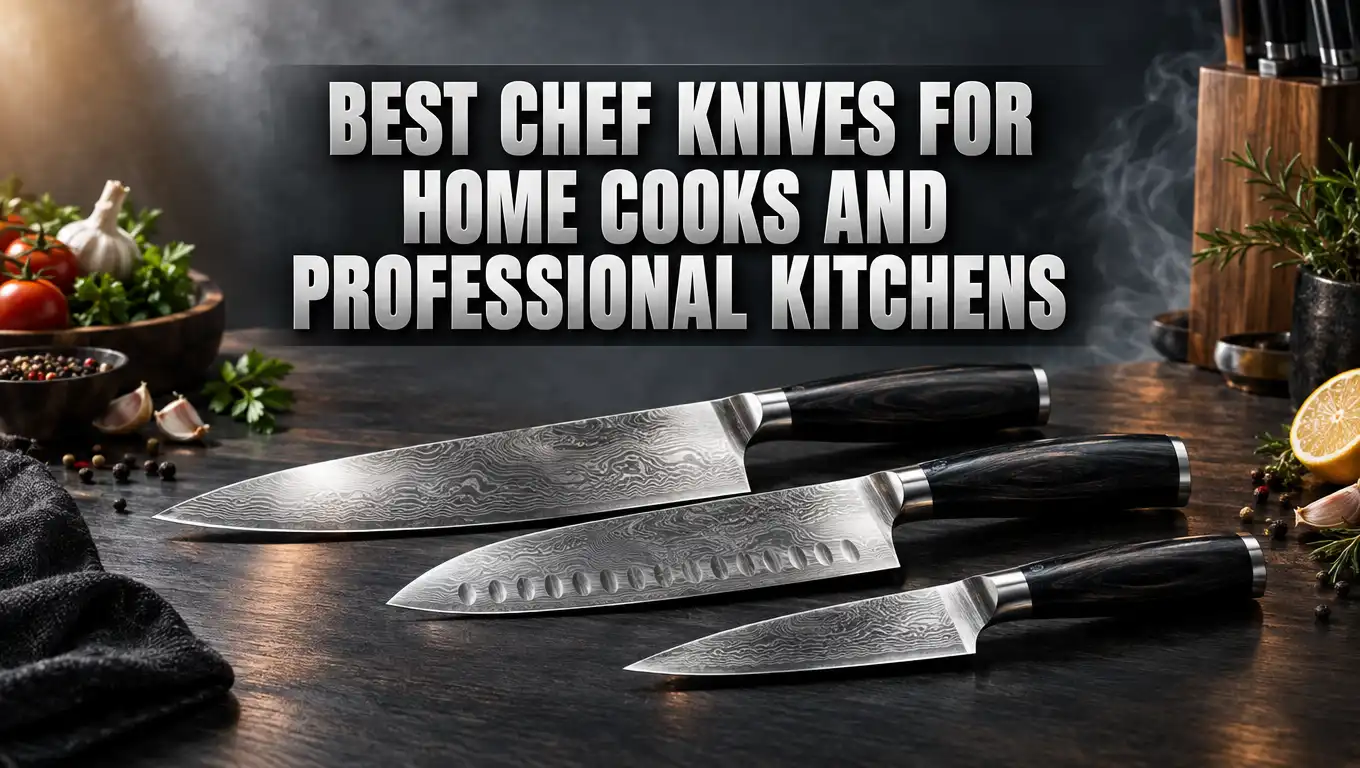
6 Best Chef Knives for Home Cooks and Professional Kitchens
A great chef knife makes cooking easier. It helps you chop, slice, and dice with confidence. The right blade turns a boring task into a smooth experience.
But finding a quality knife without spending a fortune feels tricky. Many home cooks think sharp performance only comes with a huge price tag. That’s simply not true.
We tested and researched top options to bring you knives that truly perform. Our list includes both Western style and Japanese style blades. Each one offers something special for your kitchen.
You’ll find picks like the Victorinox Fibrox for everyday reliability. We also cover the Mercer Culinary Renaissance, a favorite among home chefs. For those who love thin, sharp blades, the Tojiro DP VG10 Gyuto stands out too.
Every knife on this list brings full tang construction and comfortable handles. Steel quality varies from durable stainless to razor sharp VG10. We picked options that suit different hand sizes and grip styles.
Ready to find your perfect kitchen partner? Let’s explore the 6 best chef knives that deliver real value and lasting performance.
How We Chose Our Top Picks
We spent considerable time researching and comparing chef knives to find options that truly work in real kitchens. Our process focused on what matters most: blade sharpness, handle comfort, and how long these knives hold up to daily use.
We examined full tang construction across all picks. This feature keeps blades secure and balanced during cutting tasks. We also prioritized 8 inch blades since this size handles most kitchen jobs well.
Steel quality received close attention too. We looked at options like VG10 steel for superior edge retention. We tested both Western style and Japanese style profiles to match different cooking preferences and hand sizes.
Every knife on our list came from brands with strong reputations. We verified user feedback and professional endorsements. We excluded knives with common durability complaints or handle issues.
The result? A collection of knives that deliver real performance without unnecessary frills. Each pick offers genuine reliability for home cooks and serious food preparers alike. You can feel confident choosing from this list.
1. Victorinox Fibrox 8-Inch Chef’s Knife

- For home chefs & professionals. This Fibro Pro chef's knife has been the top choice...
- Fit for all tasks. Designed to handle kitchen tasks both big and small, This durable...

Last update on 2026-10-27 / Affiliate links / Images from Amazon Product Advertising API
The Victorinox Fibrox 8-inch chef’s knife is a workhorse blade that handles everyday kitchen tasks with ease. It suits home cooks and professionals who want reliable performance without complexity.
This knife features a full-tang construction that runs through its entire handle, creating excellent balance and durability. The western-style blade shape makes it perfect for rocking motions while chopping vegetables, meats, and herbs.
The handle uses Fibrox material, a lightweight composite that resists moisture and stays comfortable during extended use. Your hand won’t slip, even when wet, and the ergonomic design reduces fatigue over time.
In real kitchens, this blade holds its edge well and responds beautifully to honing. Users consistently report it performs like knives costing significantly more, making it a genuine value pick for serious cooking.
Pros – Excellent edge retention and easy to sharpen – Lightweight yet sturdy full-tang design – Non-slip Fibrox handle works in wet conditions – Performs reliably for both slicing and chopping tasks
Cons – Western blade profile feels different if you prefer Japanese-style knives – Requires regular honing to maintain peak sharpness – Handle material may feel less premium than wood or Damascus options
2. Mercer Culinary Renaissance 8-Inch

- Great for culinary students and professionals alike
- Slices, chops, dices, and minces a large variety of ingredients with ease
Last update on 2026-10-27 / Affiliate links / Images from Amazon Product Advertising API
The Mercer Culinary Renaissance 8-inch chef knife strikes an excellent balance between performance and simplicity. This blade works beautifully for home cooks and professionals who want a reliable everyday knife without extra frills.
The Renaissance features a German-style blade profile that rocks smoothly on the cutting board. Its edge geometry cuts through vegetables, proteins, and herbs with consistent precision and minimal effort.
Built with a full-tang construction, this knife delivers superior balance and durability through years of kitchen work. The handle uses a comfortable composite material that resists moisture and won’t split or warp over time.
In practice, the Renaissance holds its edge remarkably well and responds to regular honing without fuss. Many users report this blade becomes a trusted kitchen companion that handles virtually any cutting task.
Pros – Sharp edge straight out of the box and maintains sharpness through regular use – Full-tang construction ensures excellent balance and longevity – Comfortable handle that works well during extended prep sessions – Lightweight design reduces hand fatigue
Cons – Requires consistent honing to maintain peak performance – Western blade profile may feel unfamiliar to Japanese-style knife users
3. Zwilling Pro 8-Inch Chef’s Knife

- EFFORTLESS CONTROL AND COMFORT: Curved bolster acts as a natural extension of the...
- RAZOR-SHARP AND BUILT TO LAST: SIGMAFORGE knife is forged from a single piece of...
Last update on 2026-10-27 / Affiliate links / Images from Amazon Product Advertising API
The Zwilling Pro 8-inch chef’s knife represents German engineering meets modern kitchen demands. This blade suits both home cooks and professionals who want reliability without compromise.
The knife features a full-tang construction that delivers exceptional balance and stability during cutting tasks. Its steel composition holds an edge impressively well, making it a dependable choice for daily prep work.
The handle combines comfort with durability, designed to feel natural in your hand during extended cooking sessions. Real-world performance shows this knife responds well to regular honing and maintains its sharpness through consistent kitchen use.
Build quality stands out as a major strength—Zwilling’s reputation for precision manufacturing shows in every detail. The blade geometry cuts smoothly through vegetables, proteins, and herbs with minimal effort.
Pros – Excellent edge retention and responds beautifully to honing – Full-tang design ensures superior balance and longevity – Smooth, efficient cutting action through various ingredients – Comfortable handle reduces hand fatigue during prep work
Cons – Western blade profile may feel unfamiliar if you prefer Japanese-style knives – Requires consistent honing to maintain peak sharpness
4. Misen 8-Inch Chef’s Knife

- Surgical-Sharp AUS-10 High-Carbon Steel: Engineered to stay sharp through heavy...
- Precision-Balanced Blade-to-Handle Ratio: Perfectly tuned weight distribution gives...
Last update on 2026-10-28 / Affiliate links / Images from Amazon Product Advertising API
The Misen 8-inch chef’s knife brings Japanese-inspired design to Western kitchens with a focus on simplicity and performance. This knife appeals to cooks who want a sharp, reliable blade without unnecessary complexity.
The standout feature is its thin, laser-sharp blade that glides through vegetables, proteins, and herbs with minimal effort. Misen uses quality stainless steel that holds its edge well between sharpening sessions.
Build quality emphasizes lightweight balance paired with a comfortable handle that doesn’t fatigue your hand during long prep work. The full-tang construction keeps the knife stable and durable through regular kitchen use.
In real kitchens, this blade performs consistently and responds beautifully to honing. Cooks appreciate how it handles both rocking motions and slicing techniques without complaint.
Pros – Sharp edge straight out of the box and maintains sharpness through regular use – Lightweight design reduces hand fatigue during extended cutting sessions – Japanese-style profile works well for both slicing and rocking techniques – Comfortable handle keeps your grip secure and natural
Cons – Requires consistent honing to maintain peak performance – Thin blade profile may feel delicate compared to heavier Western-style knives
5. Tojiro DP Gyuto

- Steel Type: Stain-Resistant Steel
- Blade: Double-Edged (50/50 balanced)
Last update on 2026-10-27 / Affiliate links / Images from Amazon Product Advertising API
The Tojiro DP VG10 Gyuto is a Japanese-style chef’s knife that brings authentic craftsmanship to home and professional kitchens. It’s an ideal choice if you prefer the precision and finesse of Japanese blade geometry over Western-style knives.
What sets this knife apart is its thin, sharp VG10 steel blade that excels at clean, precise cuts through vegetables, fish, and meat. The blade profile delivers exceptional control and minimal resistance during cutting tasks.
Build quality reflects Tojiro’s reputation for Japanese precision—the knife feels balanced and responsive in your hand. The construction prioritizes a lightweight design paired with a comfortable handle that won’t tire your hand during extended use.
In real kitchens, this blade performs consistently well and maintains its edge through regular honing. The VG10 steel responds beautifully to maintenance, keeping your knife sharp and ready for daily cooking.
Pros – Razor-sharp edge straight out of the box and maintains sharpness with regular honing – Lightweight thin-profile design reduces hand fatigue during long cooking sessions – Japanese blade geometry delivers precision cuts with minimal effort – Excellent value for an entry-level Japanese knife option
Cons – Requires consistent honing to maintain peak performance – Thin blade profile may feel delicate compared to heavier Western-style knives – Japanese-style gyuto shape takes practice if you’re accustomed to Western chef’s knives
6. Mercer Culinary Genesis 8-Inch

- QUALITY CONSTRUCTION: Knife is precision-forged with high-carbon German steel for...
- SUPERIOR DESIGN: The finest handle in forged cutlery; built to last ergonomic handle...
Last update on 2026-10-27 / Affiliate links / Images from Amazon Product Advertising API
The Mercer Culinary Genesis 8-Inch is a Western-style chef’s knife built for home cooks and professionals who want solid performance without complexity. It suits anyone seeking a reliable workhorse blade for everyday chopping, slicing, and dicing tasks.
What makes this knife stand out is its short bolster design, which gives you more cutting surface and easier rocking motions on your cutting board. The blade geometry balances durability with sharpness, making it a practical choice for varied kitchen work.
Build quality emphasizes a full-tang construction that delivers consistent balance and stability through long cooking sessions. The handle feels comfortable in your hand, and the overall weight distribution supports controlled cutting without fatigue.
In real kitchens, this blade performs reliably and responds well to regular honing to maintain its edge. You’ll find it handles proteins, vegetables, and herbs with steady, predictable results across different cutting techniques.
Pros – Full-tang construction ensures excellent balance and durability – Short bolster design provides more usable blade surface for rocking cuts – Responds well to honing and maintains a practical working edge – Comfortable handle reduces hand fatigue during extended use
Cons – Western blade profile feels less delicate than Japanese-style alternatives – Requires consistent honing to keep peak performance – Not as lightweight as some thin-profile Japanese options
What to Look For Before You Buy
Choosing the right chef knife comes down to understanding a few key factors. Your decision shapes how you cook every day.
Blade length matters most. An 8-inch blade is the standard for most home cooks. It handles vegetables, meat, and herbs with equal ease. Smaller hands may prefer a 7-inch option instead.
Steel type determines how sharp your knife stays. VG10 steel offers exceptional sharpness and edge retention. European stainless steel blends durability with easier maintenance. Both work well under $100, so pick based on your honing habits.
Handle comfort prevents fatigue during prep work. Fibrox handles grip well when wet. Wooden handles feel warm in your hand but need more care. Composite materials offer a middle ground. Hold different knives before buying to see what feels natural.
Full-tang construction means the metal runs through the entire handle. This design delivers better balance and stability. Your knife won’t feel top-heavy or wobbly during cutting.
Western versus Japanese style changes how you work. Western knives have a curved blade that rocks on the cutting board. Japanese knives have straighter profiles for up-and-down chopping motions. Neither is better, just different.
Weight affects your cutting speed. Lighter knives reduce hand strain during long prep sessions. Heavier knives need less pressure but tire you faster. Test both to discover your preference.
Bolster design impacts your grip safety. A short bolster gives more cutting surface. A full bolster protects your fingers but limits usable blade length.
Consider these factors together. Your ideal knife matches your hand size, cutting style, and maintenance willingness.
How to Choose the Right One
Selecting the right chef knife means focusing on what matters most to your cooking style and hands.
Blade length is your first decision. An 8-inch blade works best for most home cooks. It handles vegetables, meat, and herbs without feeling too heavy or unwieldy. Shorter blades suit small hands, while longer ones work for larger cutting boards.
Steel quality shapes how long your edge stays sharp. VG10 steel holds a razor-sharp edge and resists rust well. Western stainless steel blends durability with easy maintenance. German-style blades chip less often but need more honing than Japanese options.
Your handle grip matters more than you think. Fibrox handles stay dry and comfortable during long prep sessions. Wooden handles feel warm but need care. Composite materials offer a middle ground. Test the knife in your hand if possible—fatigue sets in fast with a poorly balanced handle.
Full-tang construction runs metal through the entire handle. This design delivers better balance and prevents the handle from loosening over time. It’s worth the slight weight increase.
Western versus Japanese style changes everything. Western knives rock back and forth for chopping. Japanese knives excel at push cuts and slicing with a thin, responsive blade. Your cutting technique should match the knife’s design.
Bolster design affects safety and cutting surface. A short bolster gives you more blade to work with. A full bolster protects your fingers but reduces usable cutting area.
Weight influences your speed and control. Lighter knives tire your hand less. Heavier knives require less pressure for clean cuts. Find your balance between these two.
Final Verdict
Picking the right chef knife comes down to your cooking style and hand feel. Each knife on this list earns its spot for a different reason.
The Victorinox Fibrox suits home cooks who want a reliable everyday blade. It handles daily prep without fuss.
The Mercer Culinary Renaissance works best for beginners who want balance and comfort. Its grip feels natural for long cooking sessions.
If you love Japanese craftsmanship, the Tojiro DP VG10 Gyuto stands out. Its thin blade glides through vegetables and proteins with ease.
The Zwilling Pro fits cooks who want an all around performer. It handles tough cutting tasks and delicate slicing alike.
For smaller hands, the Global knife feels lighter and easier to control. Its slim design reduces wrist strain during long prep work.
The Misen knife appeals to readers who want a trusted community favorite. Many home cooks praise its sharp factory edge.
Think about how you cook before choosing. Do you slice vegetables daily or break down proteins often? Your answer points you toward the right blade.
Comfort and control matter more than brand names. Hold the knife if you can before deciding.
Every knife here delivers solid performance in real kitchens. The right pick depends on your grip style and cutting habits.
Take your time testing handle feel and blade weight. A knife that feels right in your hand becomes a kitchen partner for years.
Your best chef knife is the one you reach for every single day without hesitation.
Frequently Asked Questions
What’s the difference between Western and Japanese chef knives?
Western knives have a curved blade and thicker spine. They work best with a rocking motion on your cutting board. Japanese knives feature a straighter edge and thinner profile. They cut with a push or pull motion instead of rocking.
Western blades suit repetitive chopping. Japanese blades excel at precise slicing. Your cooking style determines which feels better in your hand.
How do I know if a chef knife has full-tang construction?
Full-tang means the metal blade extends all the way through the handle. You can often see the metal running from tip to end of the handle.
This design creates better balance and durability. The knife won’t wobble or feel top-heavy. Full-tang knives last longer because the handle and blade move as one unit.
Should I choose an 8-inch blade or something smaller?
Eight inches is the standard size for most home cooks. It handles vegetables, meat, and herbs with ease.
Smaller blades work better for detailed work or if you have smaller hands. Larger blades cut faster but feel unwieldy for delicate tasks. Test different sizes in your hand first to find your comfort zone.
What steel type keeps an edge the longest?
VG10 steel is popular in Japanese knives. It stays sharp longer and resists rust well.
German stainless steel is more forgiving if you forget to hone regularly. It requires more maintenance but handles abuse better. Your honing routine matters more than steel type. A dull knife from any steel still needs sharpening.
Does handle material really affect my cooking?
Yes. Fibrox handles grip well when wet and resist bacteria. Wooden handles feel warm but need more care. Composite materials offer durability without maintenance.
Comfort prevents hand fatigue during long prep sessions. A slippery handle causes mistakes and accidents. Test the grip before you buy.

I’m Sarah, the creator behind Kitchen Kit. I’m passionate about finding kitchen tools that actually work and make cooking easier. Through hands-on testing and honest reviews, I help home cooks discover gadgets worth their counter space and budget. When I’m not testing the latest kitchen innovations, you’ll find me experimenting with recipes and hunting for that next game-changing tool.