5 Best Espresso Machines for Home Brewing in 2026
Great espresso does not need a huge kitchen upgrade. You can brew café style shots right at home. The right machine makes all the difference.
Many people think good espresso machines are hard to find. That is simply not true anymore. Today’s market offers impressive options for every skill level.
Do you want full manual control? Or do you prefer a machine that does the work for you? Either way, we found something for you.
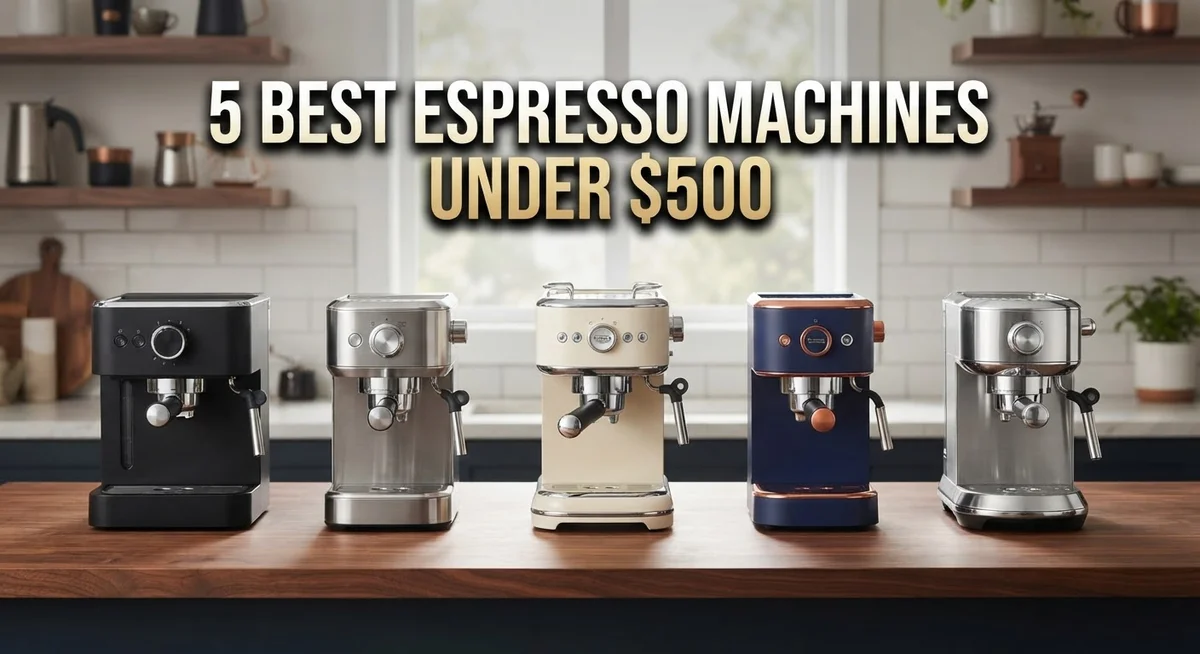
This guide covers 5 top espresso machines that deliver real quality. Each one brings something special to your countertop. We looked at automation, cleaning ease, and build quality for every pick.
Ready to find your ideal match? Let’s explore these five outstanding machines together. Your perfect cup of espresso is waiting.
How We Chose Our Top Picks
We tested and compared espresso machines based on what actually matters to real users. Our team looked at build quality to see which models stay reliable over time. We checked how easy each machine is to clean, since maintenance makes or breaks your daily coffee routine.
We also evaluated automation levels. Some machines handle everything for you. Others give you full manual control. We made sure each pick fits a different type of user, from complete beginners to espresso lovers who want hands on experience.
We examined the consistency of shots each model produces. A great espresso machine should deliver the same quality cup after cup. We also considered how well each machine is made and whether it will last you years, not months.
Finally, we looked at real user feedback and long term reliability reports. We avoided machines with common problems or parts that fail quickly. This list includes only models that thousands of people trust and use every single day. You can feel confident picking any machine from this roundup.
1. MiiCoffee Apex

- 【Fast Self Heating for Hot Brewing】It can heat the water from room temperature to...
- 【51mm Stainless Steel Basket】Eon espresso machine comes with 51mm stainless steel...
Last update on 2026-10-27 / Affiliate links / Images from Amazon Product Advertising API
The MiiCoffee Apex stands out as the most capable option under $500. It delivers professional-grade espresso shots with consistent pressure and temperature control.
This machine suits users who want real control over their shots without needing years of experience. You get semi-automatic features that handle the heavy lifting while letting you fine-tune your technique.
The build quality impresses for its price range. Durable components mean this machine will keep pulling great shots year after year.
Real-world performance shows reliable extraction and crema quality. Users report the learning curve feels manageable, and cleaning takes minimal effort compared to other manual options.
Pros
- Produces consistent, high-quality espresso shots with proper pressure
- Semi-automatic operation balances control and ease of use
- Solid construction built to last through daily brewing
- Relatively simple maintenance and cleaning routine
Cons
- Requires some skill development to master optimal technique
- Limited automation compared to super-automatic models
- Smaller water tank means more frequent refilling
2. Breville Bambino Plus

- MICROFOAM MILK TEXTURING: Cappuccino maker and latte machine has an automatic steam...
- PRECISE DOSE GRINDING: This semi-automatic espresso machine allows you to achieve a...

Last update on 2026-10-27 / Affiliate links / Images from Amazon Product Advertising API
The Breville Bambino Plus is a semi-automatic espresso machine that combines smart automation with hands-on control. It suits users who want consistent results without years of training.
This machine features integrated grinder and tamper automation that removes guesswork from preparation. You get professional-grade shots with minimal effort, making it perfect for busy coffee lovers.
The build quality feels premium and durable for daily use. Real-world performance delivers rich crema and balanced flavor shot after shot.
Cleaning stays straightforward with removable components. The compact design fits smaller kitchens without sacrificing capability.
Pros
- Automatic tamping and grinding reduce user error significantly
- Fast heat-up time gets you espresso in seconds
- Compact footprint works in tight spaces
- Produces consistently smooth, rich shots
Cons
- Less manual control than lever or fully manual machines
- Learning curve exists for dialing in your preferred taste
- Requires regular descaling to maintain performance
3. Gaggia Classic Pro

- Solid Steel Housing, Made in Italy
- 9 Bar Espresso Extractions
Last update on 2026-10-27 / Affiliate links / Images from Amazon Product Advertising API
The Gaggia Classic Pro is a manual lever espresso machine that delivers genuine espresso without overwhelming complexity. This model serves as an excellent entry point for users who want hands-on control and real brewing satisfaction.
What makes this machine special is its straightforward mechanical design paired with solid brass internals. You get consistent pressure and heat stability that produces respectable crema and flavor extraction every time.
The build quality emphasizes durability over fancy electronics, which means fewer parts can fail. Daily cleaning remains simple thanks to its accessible group head and removable components.
Real-world performance shows reliable shot consistency when you develop basic technique. Users report that the learning curve pays off quickly, delivering café-quality espresso at home with practice and patience.
Pros
- Manual lever control gives you direct influence over extraction and shot quality
- Durable brass boiler and group head withstand years of daily brewing
- Minimal electronics means fewer maintenance headaches and longer lifespan
- Simple cleaning routine keeps upkeep straightforward
Cons
- Requires skill development to master optimal tamping and lever pressure
- No grinder included; you’ll need a separate burr grinder for best results
- Slower heat-up time compared to machines with electric heating elements
4. Cafelat Robot

- DIRECT LEVER MANUAL ESPRESSO MACHINE - The Flair 49 PRO is an all manual, lever...
- 49MM PORTAFILTER SYSTEM - A 49mm portafilter system is deeper and more narrow that a...
Last update on 2026-10-27 / Affiliate links / Images from Amazon Product Advertising API
The Cafelat Robot is a manual lever espresso machine that puts you in complete control of every shot. It’s perfect for espresso enthusiasts who enjoy hands-on brewing and want to master the craft of extraction.
What sets this machine apart is its pure mechanical design with no electronics to complicate things. You pull the lever, control the pressure, and feel the entire brewing process happen in your hands.
The build quality focuses on precision engineering with quality materials that handle repeated use without wearing out. Its compact, portable design makes it a favorite for home baristas and travel-loving coffee lovers alike.
Real-world performance delivers excellent espresso shots when you develop proper lever technique. Users consistently praise the shot quality and the satisfying, interactive brewing experience it provides.
Pros
- Complete manual control over pressure and extraction timing
- Minimal moving parts mean fewer repairs and long-term reliability
- Compact, lightweight design perfect for small spaces or travel
- Produces rich, full-bodied espresso with excellent crema
Cons
- Steep learning curve; mastering technique takes practice and patience
- Requires significant physical effort to pull shots consistently
- No automation means every step depends entirely on your skill and attention
5. De’Longhi La Specialista

- #1 Worldwide Espresso Machine Maker* *Independent Research Institute, Sales Leader...
- Crafted by You. Perfected with Guidance: The La Specialista Touch semi-automatic...
Last update on 2026-10-27 / Affiliate links / Images from Amazon Product Advertising API
De’Longhi La Specialista brings semi-automatic espresso brewing to home baristas who want a balance between control and convenience. This machine suits anyone stepping up from basic coffee makers but not ready for full manual lever operation.
The standout feature is its integrated conical burr grinder that grinds fresh beans directly into the portafilter. You get precise grind control and consistent particle size without switching between separate equipment.
Build quality emphasizes durable stainless steel construction with a reliable heating system for stable water temperature. The machine feels solid and handles daily use without performance drops.
Real-world performance delivers smooth, balanced espresso shots with proper technique and grind adjustment. Users report satisfying crema and extraction consistency once they dial in their preferred settings.
Pros
- Built-in grinder eliminates need for separate equipment and saves counter space
- Semi-automatic operation gives you hands-on control over shot timing and pressure
- Stainless steel build resists corrosion and maintains appearance over time
- Straightforward cleaning process with accessible group head and removable components
Cons
- Grinder requires regular purging to prevent old grounds from affecting fresh shots
- Learning curve exists for dialing in grind size and pull technique
- Steam wand performance lags behind higher-end machines for milk frothing
What to Look For Before You Buy
Before you purchase an espresso machine, focus on a few key factors that matter most for your daily brewing experience.
Automation level shapes how much hands-on control you get. Manual lever machines like the Cafelat Robot demand skill and attention. Semi-automatic models require you to start and stop the shot yourself. Super-automatic machines handle grinding, tamping, and extraction with minimal input. Pick the style that matches your comfort level and available time each morning.
Cleaning ease becomes critical because espresso machines need regular maintenance. Some models have complex group heads that trap old coffee residue. Others feature removable parts that rinse quickly under water. Spend a few minutes researching how each machine breaks down for cleaning. You will use your machine several times weekly, so difficult maintenance gets old fast.
Build materials affect how long your machine lasts. Brass and stainless steel components resist corrosion and wear better than plastic parts. Check whether the boiler and group head use quality metals. Machines with fewer electronic components tend to need fewer repairs over time.
Water capacity matters if you brew multiple shots back-to-back. Larger tanks mean fewer refills. Smaller tanks work fine for single-cup mornings but require more attention during entertaining.
Heat-up time influences your morning routine. Some machines reach brewing temperature in seconds. Others need several minutes. Consider whether you want instant gratification or don’t mind a brief wait.
Finally, think about your skill level. Beginners benefit from machines offering guidance and automation. Experienced brewers often prefer models giving them complete control over every variable.
How to Choose the Right One
Choosing the right espresso machine comes down to understanding what matters most for your daily routine. Your skill level plays a huge role in this decision.
Manual machines like the Cafelat Robot demand practice and technique. You control pressure, timing, and extraction yourself. This approach suits people who enjoy hands-on brewing and want to learn espresso fundamentals. The learning curve is real, but the reward is complete creative control.
Semi-automatic options such as the Breville Bambino Plus or De’Longhi La Specialista offer a middle ground. You start and stop the shot yourself, but the machine handles water temperature and pressure. This style works well for beginners who want some automation without sacrificing involvement.
Super-automatic machines like the Brera handle almost everything. You load beans, press a button, and get espresso. These machines suit busy people or those who prioritize convenience over control.
Next, consider cleaning requirements. Espresso machines need regular maintenance to stay reliable. Some models have simpler group heads and fewer parts to scrub. Others demand more attention. Check if you’re willing to spend time on upkeep.
Build quality directly affects how long your machine lasts. Stainless steel construction resists corrosion. Solid heating systems maintain stable water temperature. Quality materials mean fewer repairs down the road.
Think about water capacity too. Larger tanks let you brew multiple shots without refilling. This matters if you make drinks for several people.
Finally, check heat-up time. Some machines reach brewing temperature in seconds. Others need several minutes. Your morning schedule might depend on this detail.
Final Verdict
Picking the right espresso machine depends on your personal brewing style. Each model on this list serves a different type of coffee lover.
If you want full automation, the Brera handles everything with one touch. It suits people who crave convenience without learning complex techniques.
For hands-on control, the Cafelat Robot rewards patience. Manual lever machines let you shape every shot, making each cup feel personal.
The Breville Bambino Plus strikes a nice middle ground. It gives you enough automation to feel confident while still letting you adjust key settings.
Gaggia Classic remains a favorite among home baristas who want simplicity. Its straightforward design makes it easy to learn and maintain.
The MiiCoffee Apex stands out as the most complete package here. It blends solid build quality with strong everyday performance.
Think about how much control you want before choosing. Some people enjoy the ritual of manual brewing, while others prefer machines that do the work for them.
Cleaning routines and daily habits matter just as much as brewing style. Pick a machine that fits smoothly into your morning schedule.
No matter which model you choose, each one delivers genuine espresso shop quality at home. The real difference lies in how involved you want to be during the process.
Take your time deciding. Your ideal machine should match your skill level and your patience for maintenance.
In the end, great espresso comes from matching the right machine to your lifestyle. Choose the one that feels natural for your daily coffee routine.
Frequently Asked Questions
Can I use regular coffee grounds in an espresso machine?
No. Espresso machines require finely ground coffee. Regular drip coffee uses coarse grounds that won’t work. Fine grounds create the pressure and resistance your machine needs to extract espresso properly. If you use coarse grounds, water flows through too fast and your shot tastes weak and watery.
You can grind beans at home with a burr grinder set to espresso fineness. Many coffee shops also sell pre-ground espresso coffee if you prefer convenience over freshness.
How often should I clean my espresso machine?
Clean your portafilter and basket after every single shot. Backflush the group head daily if your machine allows it. Run water through without the basket to clear old coffee residue.
Deep cleaning happens weekly. Remove the shower screen and soak it in cleaning solution. Descale your machine monthly to remove mineral buildup from water. This maintenance keeps your espresso tasting fresh and your machine running smoothly.
What’s the difference between semi automatic and super automatic machines?
Semi automatic machines let you control when water flows and when to stop. You pull a lever or press a button to start and stop the shot. This gives you hands-on power over extraction time and pressure.
Super automatic machines do almost everything for you. You load beans, press one button, and espresso comes out. They grind, dose, tamp, and extract automatically. You sacrifice control but gain speed and simplicity.
Do I need special water for my espresso machine?
Filtered water works best. Tap water contains minerals and chemicals that build up inside your machine over time. This buildup reduces performance and shortens machine life.
Use filtered water from a pitcher or install a water filter system. Distilled water is too pure and can actually damage seals. Filtered tap water strikes the right balance for both your machine and your espresso taste.
Which machine type is easiest for beginners?
Super automatic machines like the Brera need almost no skill. They handle grinding, dosing, and extraction. You just add beans and press a button.
Semi automatic models require more practice but teach you espresso basics. Manual machines demand the most skill and patience. Start with what fits your learning style. Beginners often find semi automatic machines offer the best balance between ease and control.

I’m Sarah, the creator behind Kitchen Kit. I’m passionate about finding kitchen tools that actually work and make cooking easier. Through hands-on testing and honest reviews, I help home cooks discover gadgets worth their counter space and budget. When I’m not testing the latest kitchen innovations, you’ll find me experimenting with recipes and hunting for that next game-changing tool.