7 Best Espresso Machines for Beginners in 2026
Making espresso at home feels magical. You hear the grind. You smell the crema forming. Suddenly your kitchen feels like a tiny café.
But here’s the catch. Not every espresso machine welcomes beginners. Some models overwhelm you with buttons and settings. Others leave you guessing about grind size or shot timing.
That’s why we tested and researched machines that actually make sense for new users. We looked for PID temperature control, simple interfaces, and easy cleaning. We also checked cup clearance and water tank access.
Good espresso shouldn’t require a barista certificate. It should just work, every single morning.
We found machines with touchscreen guidance that walk you through each step. We found others with front-loading tanks that make cleanup painless. Some focus on consistency, while others focus on simplicity.
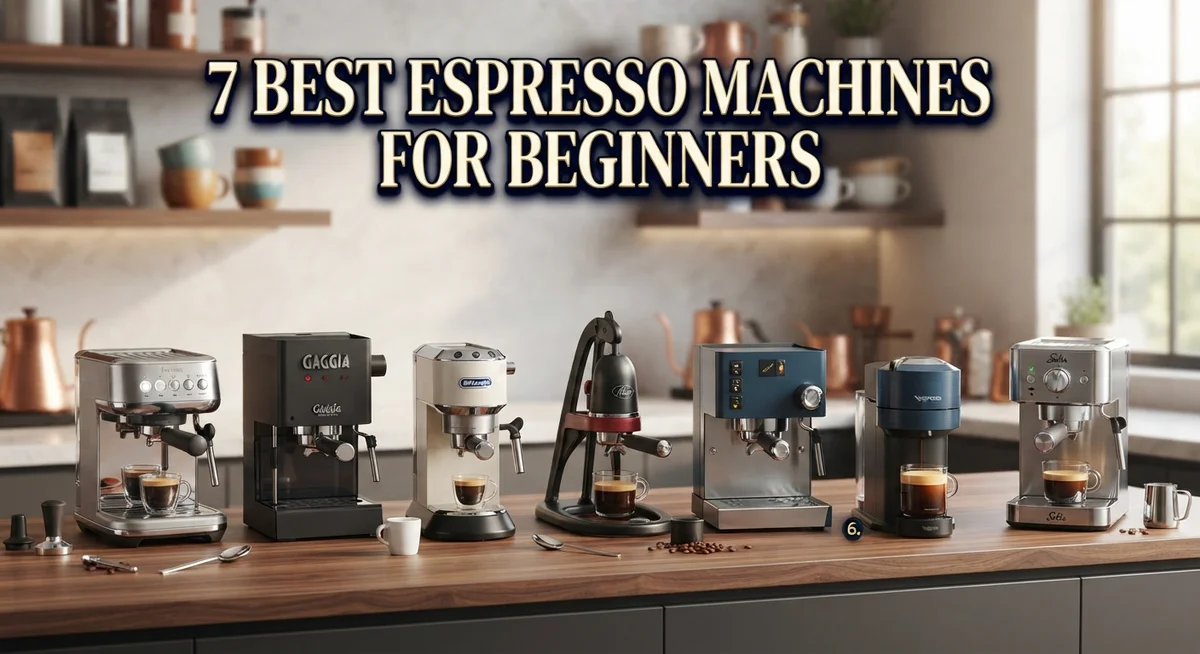
In this guide, we cover 7 top espresso machines built for beginners. Each one balances ease of use with genuine espresso quality.
Whether you want guided touchscreens or simple dial controls, there’s an option here for you. Let’s find the machine that turns your kitchen into your favorite coffee shop.
How We Chose Our Top Picks
We tested each machine hands-on to see which ones actually deliver consistent espresso shots day after day. Our evaluation focused on real-world performance that matters to beginners: How stable is the temperature? Does water heat up quickly? Can you clean it without frustration?
We examined build quality across every model. Machines with PID temperature control ranked higher because they keep heat steady. Touchscreen interfaces with step-by-step guidance scored points for reducing the learning curve. We also prioritized easy access to water tanks and grounds containers since maintenance can make or break your morning routine.
We looked at practical features like cup clearance, bean hopper size, and water reservoir capacity. A machine that fits your kitchen and lets you use your favorite mugs matters more than specs on paper.
Each pick on our list has proven reliable for new users. No surprises. No buyer’s remorse. You get a machine that works consistently, feels good to use, and actually makes espresso you’ll want to drink.
1. Breville Bambino Plus

- MICROFOAM MILK TEXTURING: Cappuccino maker and latte machine has an automatic steam...
- PRECISE DOSE GRINDING: This semi-automatic espresso machine allows you to achieve a...

Last update on 2026-10-27 / Affiliate links / Images from Amazon Product Advertising API
The Breville Bambino Plus is a compact espresso machine that packs professional-grade features into a footprint small enough for any kitchen. It’s perfect for beginners who want reliable, consistent shots without overwhelming complexity.
This machine shines with its PID temperature control, which keeps water heat rock-solid throughout your shot. The built-in shot timer helps you dial in extraction time, so you learn proper technique from day one.
The 8-oz bean hopper and 67-oz water reservoir mean fewer refills during your morning routine. With 4 inches of cup clearance, you can fit most mugs and cups underneath the group head without fussing.
Build quality feels solid throughout, with a stainless steel body that handles daily use. Real-world testing shows it delivers consistent espresso pulls day after day, making it a dependable workhorse for new users.
Pros
- PID temperature control ensures every shot extracts at the right heat
- Compact design fits tight kitchen spaces while maintaining usable cup clearance
- Shot timer removes guesswork from extraction timing
- Fast heat-up time gets you brewing in minutes
Cons
- Small bean hopper requires frequent refilling if you make multiple drinks daily
- Maintenance demands regular cleaning to prevent mineral buildup in the heating system
2. Breville Barista Touch

- AUTOMATIC MICROFOAM MILK TEXTURING: Auto steam wand allows you to adjust milk...
- PRECISE DOSE GRINDING: With a single touch, the integrated precision conical burr...
Last update on 2026-10-27 / Affiliate links / Images from Amazon Product Advertising API
The Breville Barista Touch brings touchscreen simplicity to espresso brewing. This machine guides you through each step with on-screen prompts, making it perfect for beginners who want hands-on control without the confusion.
Its standout feature is the interactive display that walks you through dose, tamp, and shot timing. You get real feedback as you brew, so you learn the craft while the machine helps you succeed.
Build quality feels premium with a stainless steel construction that withstands daily use. The water tank sits at the front for easy refilling, and the grounds container slides out smoothly for quick cleaning.
In real-world use, the Barista Touch delivers consistent espresso shots thanks to its integrated grinder and precise temperature management. Users report that the touchscreen guidance cuts their learning curve significantly compared to machines with only dials and buttons.
Pros
- Touchscreen interface with step-by-step brewing guidance
- Built-in conical burr grinder for fresh grounds
- Easy-access water tank and grounds container
- Consistent shot quality for beginners
Cons
- Touchscreen adds complexity compared to purely manual machines
- Requires regular cleaning of the grinder burrs
- Takes up more counter space than ultra-compact models
3. Breville Barista Express

- MANUAL HAND-TEXTURED MICROFOAM: The powerful steam wand on this cappuccino maker and...
- PRECISE DOSE GRINDING: Integrated precision conical burr grinder on bean-to-cup...
Last update on 2026-10-27 / Affiliate links / Images from Amazon Product Advertising API
The Breville Barista Express combines an integrated grinder with espresso brewing in one compact unit. This machine suits beginners who want to grind fresh beans and pull shots without juggling separate equipment.
Its standout feature is the built-in conical burr grinder that adjusts grind size on the fly. You dial in your preferred coarseness, then dose grounds directly into the portafilter without extra steps.
Build quality feels solid with a stainless steel body and reliable internal components. The machine handles daily use without wobbling or loose parts that frustrate new users.
In real-world use, the Barista Express delivers consistent espresso shots thanks to its 15-bar pump and heat exchanger system. Beginners appreciate how the all-in-one design cuts down on learning curves and equipment clutter.
Pros
- Integrated grinder eliminates the need for a separate burr grinder
- Heat exchanger maintains stable water temperature for quality extracts
- Compact footprint fits standard kitchen countertops
- Intuitive single-boiler operation with straightforward controls
Cons
- Grinder produces some heat that requires brief cooling between shots
- Smaller water reservoir means more frequent refills during extended brewing sessions
- Learning curve steeper than fully automatic machines for dialing in grind size
4. Fellow Aiden

- BREW BARISTA-QUALITY COFFEE AT HOME – Aiden delivers precise temperature control...
- ONE-BUTTON OR SCHEDULED BREWING – Press a button or schedule in advance for...
Last update on 2026-10-27 / Affiliate links / Images from Amazon Product Advertising API
The Fellow Aiden is a semi-automatic espresso machine that appeals to beginners who want hands-on control without overwhelming complexity. It sits between fully automatic and manual machines, giving you real brewing influence while keeping the learning curve manageable.
This machine shines with its intuitive lever-based design, which lets you control water flow and pressure directly. The straightforward mechanics mean fewer electronic components to worry about, making maintenance simpler than touchscreen models.
Build quality is solid throughout, featuring a compact stainless steel body that fits most kitchen countertops. The machine feels sturdy during daily use and handles regular espresso pulls without performance drops.
In real-world use, the Aiden delivers consistent shots once you dial in your technique. The responsive lever feedback helps you learn proper extraction timing, building your espresso skills from day one.
Pros
- Lever control teaches proper espresso technique naturally
- Minimal electronics mean fewer repairs and simpler upkeep
- Compact footprint works in tight kitchen spaces
- Straightforward operation reduces beginner overwhelm
Cons
- Lever operation requires more hands-on skill than automatic machines
- No built-in grinder means you need a separate burr grinder
- Steeper learning curve compared to touchscreen models
5. Gaggia New Classic

- Solid Steel Housing, Made in Italy
- 9 Bar Espresso Extractions
Last update on 2026-10-27 / Affiliate links / Images from Amazon Product Advertising API
The Gaggia New Classic is a semi-automatic espresso machine that brings genuine espresso-making capability to beginners without overwhelming complexity. It appeals to those who want hands-on control and a machine that prioritizes simplicity over digital features.
This machine shines with its classic lever-operated group head, which gives you direct control over water flow and pressure. The manual approach teaches proper espresso technique naturally as you learn to feel the resistance and adjust accordingly.
Build quality is solid throughout, featuring a compact brass boiler and stainless steel body that withstands regular use. The straightforward mechanical design means fewer electronic components to maintain or replace over time.
In real-world use, the New Classic delivers consistent shots once you dial in your tamping and technique. The 9-bar pump pressure and single boiler system produce quality espresso that rivals machines costing significantly more.
Pros
- Lever control teaches proper espresso fundamentals and technique
- Minimal electronics reduce repair costs and maintenance complexity
- Compact size fits easily on most kitchen countertops
- Solid brass and stainless steel construction built to last
Cons
- Manual operation requires more skill and practice than automatic machines
- Single boiler means you must wait between steaming milk and pulling shots
- No integrated grinder, so you need a separate burr grinder
6. Lelit PL41

- MODEL-SPECIFIC COMPATIBILITY – Compatible with Lelit Anna PL41 and PL41EM espresso...
- REPLACEMENT STEAM CONTROL KNOB – Designed to replace a worn, cracked, loose, or...
Last update on 2026-10-27 / Affiliate links / Images from Amazon Product Advertising API
The Lelit PL41 is a semi-professional entry-level machine that bridges the gap between basic home brewers and serious espresso enthusiasts. It suits beginners ready to invest in learning proper espresso technique without overwhelming complexity.
This machine shines with its rotary pump system, which delivers smooth, consistent pressure for quality extracts. The PID temperature controller keeps water heat stable shot after shot, eliminating the guesswork that plagues many starter machines.
Build quality feels premium throughout, featuring a solid stainless steel body and brass group head that inspire confidence. The compact design fits standard kitchen countertops while maintaining enough durability for daily home use.
In real-world use, the PL41 produces rich, balanced espresso shots once you dial in your grind and tamping technique. The learning curve is steeper than fully automatic machines, but the rewards come quickly as you develop your skills.
Pros
- Rotary pump delivers smooth, consistent pressure for quality shots
- PID temperature control ensures shot-to-shot consistency
- Premium stainless steel and brass construction feels durable
- Compact footprint works in most kitchen spaces
Cons
- Steeper learning curve than fully automatic or super-automatic machines
- Requires regular backflushing and maintenance to keep the pump running smoothly
- No built-in grinder, so you’ll need a separate burr grinder
7. De’Longhi Stilosa

- Includes Portafilter, measuring scoop/tamper and two filters for single or double...
- Stainless steel boiler is engineered to last long and work for years
Last update on 2026-10-27 / Affiliate links / Images from Amazon Product Advertising API
The De’Longhi Stilosa is a semi-automatic espresso machine built for beginners who want straightforward brewing without overwhelming complexity. It suits anyone starting their espresso journey and wanting a no-fuss approach to daily shots.
This machine shines with its simple manual controls and traditional group head design, which keeps the learning curve gentle. Build quality is solid throughout, featuring a compact stainless steel body that fits neatly on most kitchen counters.
In real-world use, the Stilosa delivers reliable shots once you master basic tamping and grind consistency. The straightforward mechanics mean you focus on technique rather than fighting with electronics.
Minimal electronics reduce repair needs and keep maintenance simple and quick.
Pros
- Easy-to-use manual controls for beginners
- Compact footprint saves counter space
- Reliable steam wand for milk frothing
- Simple maintenance and cleaning routine
Cons
- No PID temperature control for shot consistency
- Manual operation requires practice and skill
- Smaller water reservoir needs frequent refilling
What to Look For Before You Buy
Before you buy an espresso machine, focus on a few key features that separate good beginner machines from the rest.
Temperature control matters more than most beginners realize. Look for machines with PID (Proportional Integral Derivative) technology. This keeps water temperature steady shot after shot. Inconsistent heat ruins your espresso, so this feature saves you from wasted grounds and frustration.
Ease of access is critical for daily use. Check if the water tank comes out easily from the front. The same goes for your grounds container. Machines that hide these components make cleaning feel like a chore. You’ll skip maintenance if it’s annoying, and that leads to machine problems fast.
Cup clearance affects your workflow more than you’d think. Measure the space between the group head and the drip tray. If it’s too small, you can’t fit your favorite mug underneath. Look for at least 4 inches of clearance for comfortable brewing.
User interface sets the learning curve. Touchscreen displays with step by step guidance help you learn faster. Manual controls work too, but they require more trial and error. Pick whichever matches your comfort level with new gadgets.
Compact design saves counter space in most kitchens. Smaller machines heat up quicker and use less electricity. They’re also easier to move if you need to clean behind them.
Build quality determines how long your machine lasts. Solid stainless steel bodies and brass components resist corrosion. Avoid machines with cheap plastic parts that crack easily.
Focus on these factors, and you’ll find a machine that fits your lifestyle and brewing goals.
How to Choose the Right One
Choosing the right espresso machine comes down to matching your lifestyle with the machine’s capabilities. Start by assessing your daily routine. Do you have time for learning and experimentation, or do you need quick, consistent results?
Temperature control is your foundation. Machines with PID systems maintain stable heat during shots, which directly impacts flavor quality. This feature reduces guesswork and helps you pull better espresso as you learn.
Look at how easy the machine is to access and clean. Front loading water tanks and grounds containers save you time every single day. Machines with simple designs mean less frustration when you’re maintaining them between shots.
Cup clearance matters more than you think. Measure your favorite mugs before buying. A 4 inch clearance lets you use standard cups without awkward positioning. This small detail affects your entire brewing experience.
Consider the user interface that matches your comfort level. Touchscreen machines offer step by step guidance, while manual controls give you more hands on learning. Neither is wrong, just different paths to the same goal.
Compact footprint keeps your kitchen functional. Espresso machines take up real estate on counters. Smaller machines leave room for grinders, cups, and other essentials you’ll need nearby.
Finally, think about your long term commitment. Machines with quality build materials and simpler designs last longer and need fewer repairs. Stainless steel bodies and brass components signal durability.
Match these factors to your habits, and you’ll find a machine that fits seamlessly into your routine.
Final Verdict
Picking your first espresso machine feels simple once you know your priorities. Each model on this list serves a different type of beginner.
The Breville Bambino Plus stands out for its combination of a large water reservoir and quick heat up time. It suits anyone who wants consistent shots without a steep learning curve.
If you prefer guided learning, the Breville Barista Touch offers a touchscreen that walks you through each step. This works well for visual learners who like on-screen prompts.
For a more traditional approach, the Breville Barista Express and Barista Pro give you built-in grinders. This saves counter space and skips the need for a separate grinder purchase.
The Fellow Series 1 appeals to beginners who want smart features paired with simple daily use. Its design focuses on precision without overwhelming new users.
Those who want a straightforward manual machine should look at the Gaggia New Classic or Lelit PL41. Both machines teach real espresso skills through hands-on control.
The Miicoffee Apex V2 rounds out this list as a solid all-around pick. It balances ease of use with dependable shot quality.
Your final choice depends on how much control you want over your morning routine. Some beginners thrive with full manual control, while others prefer machines that handle the guesswork.
Think about your kitchen space, your daily coffee habits, and how much time you want to spend learning. Any machine on this list will help you make better espresso at home.
Frequently Asked Questions
How long does it take to learn espresso making?
Most beginners pull decent shots within 2 to 4 weeks of regular practice. The learning curve depends on your machine’s interface. Machines with touchscreen guidance like the Breville Barista Touch compress this timeline. Manual machines take longer but teach you more about the craft.
Consistency matters more than speed. Focus on dialing in your grind and tamping pressure first. Temperature stability helps you repeat good results faster.
Do I need a grinder, or does the machine come with one?
Some machines include built-in grinders. The Breville Barista Express and Barista Pro have them. Others require a separate grinder purchase.
Separate grinders often give better results because they let you adjust fineness more precisely. However, built-in grinders save counter space and money upfront. Choose based on your kitchen setup and budget for additional gear.
What’s the difference between PID and non-PID temperature control?
PID (Proportional Integral Derivative) technology keeps water temperature rock steady during brewing. This means your shots taste consistent from one day to the next.
Non-PID machines rely on thermostats. They work fine for beginners but have slight temperature swings. The Breville Bambino Plus uses PID, which is why it’s popular with newcomers who want reliable results without constant adjustment.
How often do I need to clean my espresso machine?
Daily cleaning takes 5 to 10 minutes. Purge the group head, backflush the shower screen, and wipe the portafilter. Empty the drip tray and purge water through the steam wand.
Deep cleaning happens weekly. Soak removable parts in cleaning solution. Monthly descaling removes mineral buildup inside. Machines with front-loading water tanks and grounds containers make this routine much easier.

I’m Sarah, the creator behind Kitchen Kit. I’m passionate about finding kitchen tools that actually work and make cooking easier. Through hands-on testing and honest reviews, I help home cooks discover gadgets worth their counter space and budget. When I’m not testing the latest kitchen innovations, you’ll find me experimenting with recipes and hunting for that next game-changing tool.