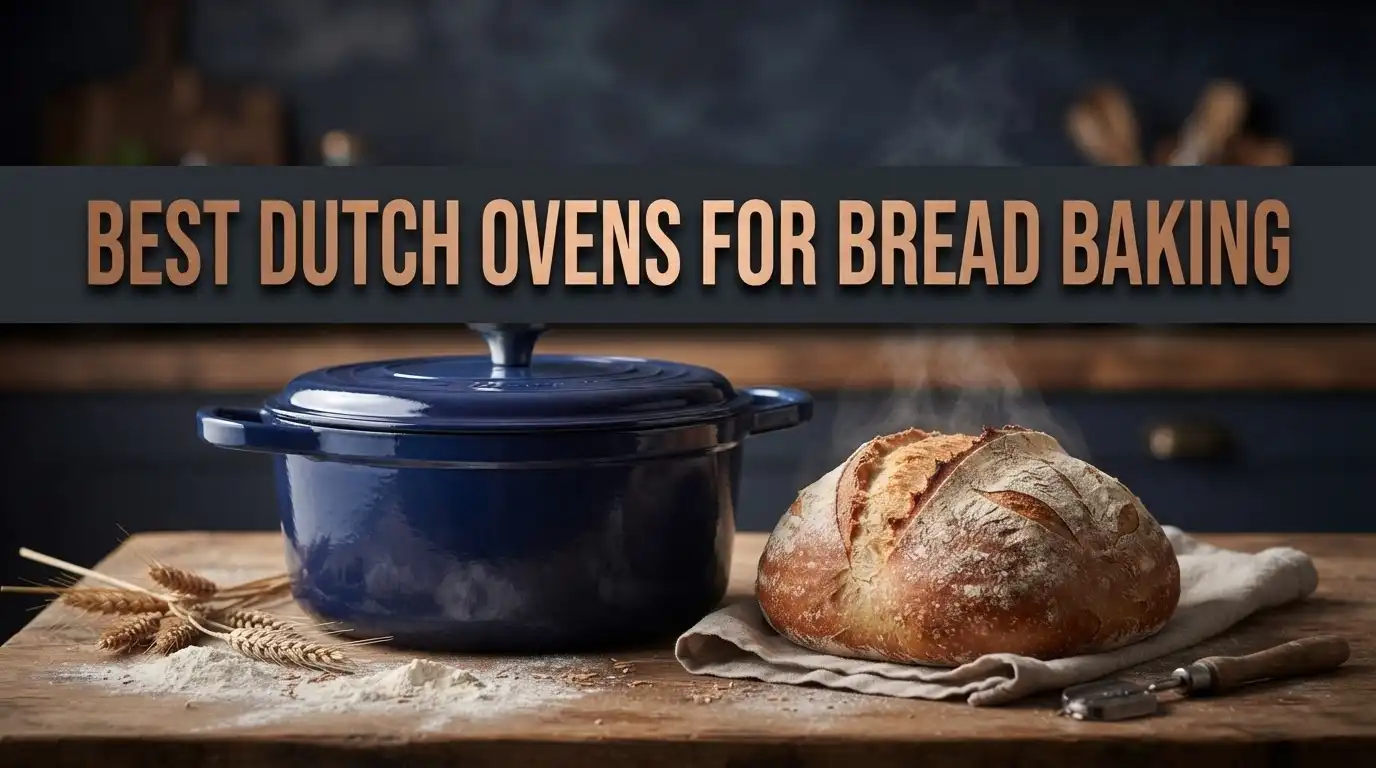
7 Best Dutch Ovens for Bread Baking in 2026
Baking bread at home feels magical. But a great loaf needs great equipment. Your Dutch oven can make or break that perfect crust.
Steam matters. A good lid traps moisture around your dough. This creates that beautiful golden crust bakers dream about.
Size matters too. Many experts now prefer a 4-quart pot over a 5-quart one. Smaller pots keep your dough contained. Your loaf rises up instead of spreading out.
Ceramic cloches from Emile Henry provide even heat distribution. Lightweight aluminum options from Brod & Taylor make handling hot pots simple and safe.
We picked our 7 best Dutch ovens for bread baking below. Each one helps you bake bakery quality bread right in your own kitchen. Let’s find the perfect match for your baking style.
How We Chose Our Top Picks
Our selection process focused on what actually works in real kitchens. We examined each Dutch oven’s ability to trap steam, retain heat, and produce a crispy crust on homemade bread.
We prioritized lid design because it directly impacts your baking results. A well fitting lid keeps moisture in and prevents your dough from spreading too wide. We also looked at how durable each option feels after repeated use.
Build quality matters. We checked the enamel coating, the weight distribution, and how evenly heat spreads across the bottom. Interior wear resistance tells us how long each piece will perform.
We tested different sizes to understand the 4 quart versus 5 quart debate. Smaller capacity containers keep your dough contained better. We also explored combo cooker styles and lightweight aluminum alternatives.
Our picks reflect real baker feedback and hands on experience. Each Dutch oven on our list earned its spot by delivering consistent results. You can feel confident choosing from these options.
1. Challenger Bread Pan

- THE ULTIMATE BREAD PAN - The only bread pan you'll need for artisan bread making: the...
- SAFER THAN DUTCH OVENS - The shallow base and easy-grip handles designed for bulky...
Last update on 2026-10-27 / Affiliate links / Images from Amazon Product Advertising API
The Challenger Bread Pan brings a combo cooker design to your kitchen, making it a favorite among home bakers who want professional results. This style combines a base pan with a cloche-style lid that sits inside, creating a sealed steam chamber around your dough.
The standout feature is its lightweight construction paired with smart geometry. The design prevents dough from spreading too wide during the oven spring, which keeps your loaf tall and structured rather than flat and dense.
Build quality shines here with durable materials that handle repeated heating cycles without warping. The lid fits snugly into the base, trapping steam exactly where you need it for that crispy, golden crust every baker craves.
Real-world performance speaks for itself—this pan delivers consistent results batch after batch. Home bakers report better oven spring and superior crust development compared to standard flat-lid Dutch ovens.
Pros
- Combo cooker style prevents dough from spreading during baking
- Lightweight design reduces energy consumption versus cast iron
- Excellent steam retention creates professional-quality crusts
- Works well with 4-quart dough volumes
Cons
- Not ideal for bakers who need a 5-quart capacity
- Cloche-style lid requires careful handling during transfers
2. Lodge Cast Iron Combo Cooker

- The Ultimate 2-in-1 Cooker: This cast iron set is a kitchen powerhouse. Use the...
- Master the Sourdough Crust: Professional bakers love this lodge Combo Cooker for...

Last update on 2026-10-27 / Affiliate links / Images from Amazon Product Advertising API
Lodge Cast Iron Combo Cooker is a two-piece system that combines a large skillet base with a matching dome lid. This design works beautifully for bread bakers who want the heat retention of cast iron without the bulk of a traditional Dutch oven.
The combo cooker style keeps your dough contained while steam circulates perfectly around the loaf. Lodge’s cast iron construction means this piece heats evenly and holds temperature longer than lighter alternatives.
Build quality is exceptional—Lodge cast iron is known for durability that lasts generations. The seasoned surface arrives ready to use, and the dome lid fits snugly to trap moisture where you need it most.
Real-world performance delivers professional-quality crusts on every bake. Home bakers report consistent results because the two-piece design prevents dough from spreading while maintaining excellent steam retention throughout the baking cycle.
Pros
- Cast iron durability withstands repeated heating cycles without warping
- Combo cooker geometry contains dough effectively during baking
- Excellent steam trapping creates crispy, golden crusts
- Works perfectly with standard 4-quart dough volumes
Cons
- Heavier than aluminum alternatives, requiring more energy to preheat
- Cast iron requires ongoing seasoning maintenance to prevent rust
- Flat lid design may allow slight dough expansion compared to cloche styles
3. Emile Henry Bread Cloche

- Made in France. The Bread Cloche is made of all natural materials and is backed by a...
- The ceramic Bread Cloche with its bell shaped cover allows you to proof your bread...
Last update on 2026-10-27 / Affiliate links / Images from Amazon Product Advertising API
The Emile Henry Bread Cloche brings ceramic construction to bread baking, offering even heat distribution that cast iron simply cannot match. This cloche suits bakers who want consistent results without the weight of traditional Dutch ovens.
Its standout feature is the dome-shaped lid design that traps steam perfectly while keeping your dough contained during the entire bake. The ceramic material heats gradually and holds temperature stability, which helps develop that coveted crispy crust.
Build quality shines through its durable ceramic construction that resists chipping and maintains its finish after hundreds of bakes. Real-world performance delivers professional-quality crusts with minimal effort—the cloche design prevents dough from spreading while steam circulates evenly around your loaf.
This option works beautifully with standard 4-quart dough volumes and fits most home ovens without taking up excessive space. Bakers report consistent, bakery-style results batch after batch.
Pros
- Lightweight ceramic reduces energy consumption compared to cast iron
- Even heat distribution creates uniform browning and crust development
- Dome lid design excels at steam retention for crispy exteriors
- Durable construction withstands repeated heating cycles without warping
Cons
- Ceramic can chip if knocked against oven racks during handling
- Requires careful placement to avoid thermal shock from temperature changes
- Not compatible with stovetop preheating like cast iron options
4. Brod & Taylor Baking Shell

- BAKERY-QUALITY BREAD AT HOME – The Bread Steel helps you achieve bakery-quality...
- HEATS UP FAST – At only 0.1" (Original) and 0.15" thick (Max), the Bread Steel...
Last update on 2026-10-27 / Affiliate links / Images from Amazon Product Advertising API
The Brod & Taylor Baking Shell combines aluminum construction with a cloche-style design that delivers professional results without the weight of cast iron. This option works best for home bakers who want efficient heat management and consistent steam retention.
Its standout feature is the lightweight aluminum cloche design that traps steam effectively while keeping your dough perfectly contained. The shallow footprint prevents dough from spreading during the bake, which means you get taller, more controlled loaves.
Build quality shines through its durable aluminum shell that resists warping even after many heating cycles. The design feels sturdy and reliable, holding up well to repeated oven use without degradation.
Real-world performance delivers crispy, golden crusts with excellent oven spring on every bake. Bakers report consistent results with standard 4-quart dough volumes, making this a dependable choice for regular bread making.
Pros
- Lightweight aluminum reduces energy consumption compared to cast iron options
- Cloche design traps steam efficiently for professional-quality crusts
- Compact footprint prevents dough from spreading during baking
- Minimal maintenance required versus seasoned cast iron
Cons
- Aluminum may not retain heat as long as cast iron during extended baking
- Cloche-style lids can be less versatile than flat-lid combo cookers for other cooking tasks
5. Lodge Enameled Dutch Oven

- Quality Enameled Dutch Oven: The Lodge Essential Enamel Cast Iron Dutch Oven gives...
- Simmer in Style: This colorful enamel pot comes in a variety of colors to add a pop...
Last update on 2026-10-27 / Affiliate links / Images from Amazon Product Advertising API
The Lodge Enameled Dutch Oven brings cast iron reliability to bread baking with a classic flat-lid design. This option works best for bakers who want durability and heat retention without switching to specialty styles.
Its standout feature is the enameled coating that eliminates seasoning maintenance while protecting the cast iron underneath. The smooth enamel interior resists rust and makes cleanup straightforward after each bake.
Build quality is exceptional—Lodge cast iron is known for durability that lasts generations. The heavy-duty construction withstands repeated heating cycles without warping or degradation.
Real-world performance delivers excellent heat retention that creates golden, crispy crusts on your loaves. The flat lid traps steam effectively, though dough may spread slightly more than combo cooker styles due to the wider interior space.
Pros
- Cast iron construction provides superior heat retention and even baking
- Enameled surface eliminates seasoning and simplifies cleanup
- Works with standard 4-quart dough volumes reliably
- Built to last decades with proper care
Cons
- Flat-lid design allows more dough spreading than combo cooker alternatives
- Heavier weight increases energy consumption during preheating
- Requires careful handling to avoid chipping the enamel coating
6. Le Creuset Dutch Oven

- Enameled cast iron delivers superior heat distribution and retention; Ready to use...
- Easy-to-clean and durable enamel resists dulling, staining, chipping and cracking...
Last update on 2026-10-27 / Affiliate links / Images from Amazon Product Advertising API
Le Creuset Dutch Oven stands as a premium choice for bread bakers who value both performance and aesthetics. This enameled cast iron vessel combines French craftsmanship with practical functionality that works beautifully for home bakers seeking consistent results.
Its standout feature is the vibrant enamel coating available in multiple colors that adds visual appeal to your kitchen. The superior heat retention from cast iron construction ensures even baking temperatures throughout your loaf’s rise and crust development.
Build quality represents Le Creuset’s hallmark—the enamel finish resists chipping and maintains its appearance through countless baking sessions. The cast iron base develops exceptional heat distribution that prevents hot spots and cold zones inside the oven.
Real-world performance delivers golden, crispy crusts with excellent oven spring on every bake. The traditional flat-lid design traps steam effectively when properly sealed, creating that professional bakery quality at home.
Pros
- Exceptional heat retention from quality cast iron construction
- Beautiful enamel finish available in numerous color options
- Enameled surface eliminates seasoning maintenance completely
- Reliable performance with standard 4-quart dough volumes
Cons
- Heavy weight requires careful handling during baking
- Flat-lid design may allow slight dough spreading compared to cloche styles
- Higher energy consumption than lightweight ceramic alternatives
7. Staub Cocotte Dutch Oven

- 5-quart cocotte for soups, stews, and braises and deep-frying without messy stove...
- Large capacity and slim profile that doesn’t take up valuable stovetop space and...
Last update on 2026-10-27 / Affiliate links / Images from Amazon Product Advertising API
Staub Cocotte Dutch Oven brings French engineering to your bread-baking routine. This cast iron cocotte works beautifully for home bakers who want professional results without fussing over maintenance.
Its standout feature is the black matte enamel interior that resists staining and eliminates the need for seasoning. The self-basting lid design traps steam efficiently, creating the moisture environment your bread needs for an exceptional crust.
Build quality reflects Staub’s reputation—the enameled cast iron construction handles repeated heating cycles without degradation. The thick walls distribute heat evenly across your dough, ensuring consistent baking from edge to center.
Real-world performance delivers crispy, golden crusts with reliable oven spring on every loaf. The 4-quart capacity matches standard bread dough volumes perfectly, preventing your dough from spreading too wide during the bake.
Pros
- Self-basting lid design maximizes steam retention for superior crust development
- Black matte enamel interior hides stains and requires zero seasoning
- Exceptional heat distribution from quality cast iron construction
- 4-quart size fits standard bread recipes without excess space
Cons
- Heavier than aluminum alternatives, requiring more handling effort
- Cast iron takes longer to preheat than lighter materials
- Limited color options compared to other premium Dutch ovens
What to Look For Before You Buy
Before you buy a Dutch oven for bread baking, focus on a few critical factors that directly impact your results.
Size matters more than you think. A 4 quart Dutch oven works better than a 5 quart for most bread bakers. The smaller footprint keeps your dough contained instead of spreading flat. This containment improves oven spring and crust development.
Lid design is your biggest decision. Flat lids allow steam to escape around the edges. Cloche style lids trap steam more effectively and create superior crusts. Combo cooker designs combine both a Dutch oven and cloche, giving you flexibility for different baking methods.
Interior surface quality affects durability. Look for enameled interiors that resist wear and eliminate seasoning maintenance. Matte black enamel hides stains better than light colors. Check that the enamel coating is thick and applied evenly.
Cast iron construction delivers consistent heat. Heavy cast iron retains heat longer and distributes it evenly across your loaf. This creates golden, crispy crusts with reliable oven spring.
Consider your dough volume. Match the Dutch oven capacity to the amount of dough you typically bake. A 4 quart size handles standard bread recipes without crowding.
Weight and handling matter. Lightweight aluminum cloches are easier to manage than cast iron, though cast iron performs slightly better. Think about whether you’ll move your Dutch oven frequently during baking.
Evaluate lid fit. A tight fitting lid traps steam efficiently. Loose fitting lids let moisture escape, which reduces crust quality.
Take time to assess these factors before deciding. Your choice directly influences how your bread bakes.
How to Choose the Right One
Choosing the right Dutch oven requires understanding what features matter most for your bread baking goals.
Size is your first decision. A 4 quart Dutch oven outperforms a 5 quart for most home bakers. The smaller footprint keeps your dough contained instead of spreading flat. This containment creates better oven spring and a more defined loaf shape.
Lid design directly impacts your results. Flat lids allow steam to escape around the edges during baking. Cloche style lids trap steam more effectively, which creates that crispy, golden crust you want. Combo cooker designs combine the best of both approaches and are gaining popularity among serious bread bakers.
Interior surface quality matters for longevity. Enameled interiors resist wear and eliminate the need for seasoning maintenance. Look for finishes that hide stains well. Black matte enamel interiors perform better than lighter colors over time.
Cast iron construction is essential. Heavy cast iron retains heat longer and distributes it evenly throughout the baking process. This consistency transforms your bread’s texture and crust quality.
Match capacity to your dough volume. If you typically bake one loaf, a 4 quart works perfectly. If you bake two loaves at once, you might need something larger. Consider how the Dutch oven fits in your oven too.
Think about alternatives. Lightweight aluminum cloches offer efficiency benefits. Some bakers skip Dutch ovens entirely and use loaf pans for energy savings.
The best Dutch oven matches your specific baking habits and oven setup. Test what works for your routine before committing to one style.
Final Verdict
Picking the right Dutch oven comes down to your baking style and daily needs. Each option on this list shines in different ways.
The Challenger Bread Pan stands out for bakers who want a combo cooker style with more room to score and handle dough. Its shallow base makes loading easier than deep pots.
If you want classic reliability, the Lodge Dutch Oven remains a smart pick. It handles frequent baking sessions and simple cleanup without fuss.
For bakers who prefer lightweight tools, the Brod & Taylor Baking Shell and Steel offers an aluminum cloche design. It heats fast and stores easily since it weighs less than cast iron.
The Emile Henry Bread Cloche suits bakers who want a dome shaped design for even steam flow. Its ceramic build also adds a nice look on your counter.
Think about how often you bake and how much storage space you have. Combo cooker styles work great for bakers who want flexibility between shallow and deep baking. Cloche designs work best for single loaf bakers who value simple steam control.
If portability matters, aluminum options beat heavier cast iron pots. If you want maximum durability, cast iron still wins over time.
There is no single best choice for every kitchen. Your ideal pick depends on your bread style, your kitchen space, and how much weight you want to lift daily.
Match the tool to your baking habits, and any option on this list will help you bake better bread at home.
Frequently Asked Questions
Can I use a regular oven-safe pot instead of a Dutch oven for bread?
You can bake bread in any oven-safe pot with a lid. However, Dutch ovens work better because of their thick cast iron walls. They trap steam more effectively and distribute heat evenly.
Regular pots often have thinner walls. This means heat bounces around unevenly. Your bread may bake too fast on the outside and stay dense inside.
A Dutch oven’s heavy construction creates the hot, humid environment your bread needs. The result is a crispy crust and open crumb structure.
What’s the difference between a flat lid and a cloche lid?
Flat lids sit directly on the rim of your pot. Steam escapes around the edges during baking. This can reduce oven spring and crust quality.
Cloche lids dome upward. They create more internal space for steam to circulate. The steam stays trapped longer, giving you better oven spring and a darker, crispier crust.
Combo cooker designs combine both styles. The cloche lid sits inside a flat base, offering flexibility for different baking methods.
Does my Dutch oven need seasoning before I use it?
Cast iron Dutch ovens need seasoning. Raw cast iron will rust and stick to your dough.
Enameled Dutch ovens don’t need seasoning. The enamel coating protects the iron underneath. You simply wash it like a normal pot.
If your Dutch oven has an enamel interior, you skip this step entirely. Just make sure the enamel is in good condition before baking.
How do I know what size Dutch oven to buy?
Match the size to your typical dough weight. A 4 quart Dutch oven works best for most home bakers. It holds a standard 500 to 750 gram loaf comfortably.
A 5 quart pot gives your dough too much room. The dough spreads out instead of rising up. Your bread becomes flat and dense.
If you bake two loaves at once, a 5 quart makes sense. Otherwise, stick with 4 quart.

I’m Sarah, the creator behind Kitchen Kit. I’m passionate about finding kitchen tools that actually work and make cooking easier. Through hands-on testing and honest reviews, I help home cooks discover gadgets worth their counter space and budget. When I’m not testing the latest kitchen innovations, you’ll find me experimenting with recipes and hunting for that next game-changing tool.